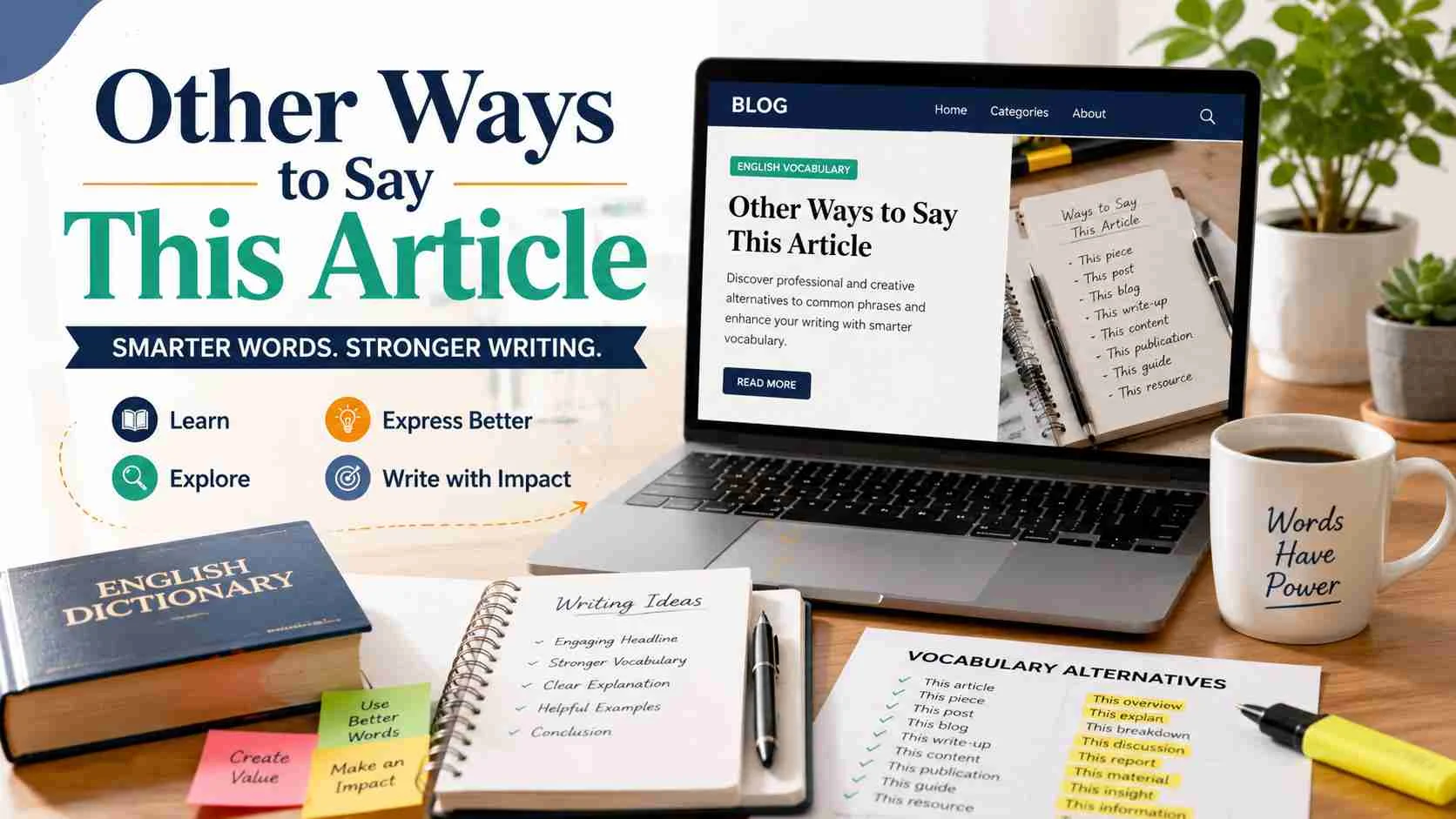
If you want to avoid repeating “this article,” you can use alternatives like this guide, this post, this piece, this write up or this resource. Choosing the right phrase helps your writing sound more natural, engaging and professional while improving readability.
Top Alternatives: this guide, this post, this piece, this write up, this resource
The phrase “this article” is one of the most commonly used expressions in blogs, websites, academic writing, and online publications. Writers often use it to refer to the content readers are currently reading or discussing.
Although the phrase is perfectly correct, repeating it several times can make your writing sound repetitive. Learning alternatives to “this article” allows you to write with greater variety while keeping your content clear and engaging.
You’re creating blog posts, academic papers, marketing content, or professional documents, knowing other ways to say “this article” will improve your writing style and help you communicate more naturally. It also makes your content easier to read and demonstrates stronger English fluency.
The best writers don’t use bigger words they choose the right words.
Formal Alternatives to “This Article”
- this paper
- this publication
- this document
- this report
Pro Tip
Use formal alternatives when writing research papers, reports, academic assignments, or business documents to maintain a professional tone.
Casual Alternatives
- this post
- this piece
- this write up
- this page
Pro Tip
Casual alternatives work best for blogs, newsletters, and everyday online writing where the tone is friendly and conversational.
Professional Alternatives
- this guide
- this resource
- this overview
- this publication
Pro Tip
Professional alternatives help your content sound credible without becoming overly formal.
Informal Expressions
- today’s read
- this story
- this feature
- today’s post
Pro Tip
Informal expressions are excellent for lifestyle blogs, social media posts, and personal websites where a relaxed tone feels more natural.
Small wording changes can make your writing feel more polished and professional.
Common Mistakes When Using “This Article”
1. Repeating “this article” too often
Using the same phrase in every paragraph makes your writing monotonous.
Example:
This article explains grammar. This article also provides examples.
2. Using it in casual conversations
People rarely say “this article” while speaking naturally.
Example:
Incorrect: I loved this article you told me yesterday.
Better: I loved that post you shared yesterday.
3. Choosing an overly formal alternative for a blog
Words like “publication” may sound too academic for casual readers.
Example:
This publication teaches cooking recipes.
4. Using the wrong context
A research paper should not be called “this blog post.”
Example:
Incorrect: This blog post presents scientific findings.
5. Mixing multiple alternatives unnecessarily
Changing the phrase every sentence can confuse readers.
Example:
This guide… this publication… this report… this page…
Stay consistent throughout your writing.
What Does “This Article” Mean?
The phrase “this article” refers to the written content that the reader is currently reading. It identifies a specific piece of writing and is commonly used in blogs, magazines, newspapers, research papers, and websites.
Grammatically, “this” is a demonstrative determiner pointing to something nearby or currently being discussed, while “article” is a singular noun.
Example Sentence:
This article explains how to improve your English vocabulary.
When to Use “This Article”
You can use this phrase in many situations, including:
- Referring to the current blog post
- Introducing the topic you’re discussing
- Explaining what readers will learn
- Summarizing important points
- Academic discussions
- Website content
- Online magazines
- Educational resources
Spoken vs Written
Written: Very common.
Spoken: Less common because people usually say “this post” or “this piece.”
Formal vs Informal
Formal: Acceptable.
Informal: Acceptable, but alternatives often sound more natural.
Using varied vocabulary makes your content easier to read and more enjoyable.
Is It Professional or Polite to Say “This Article”?
Yes, “this article” is polite and grammatically correct. It is widely accepted in professional writing, blogs, educational content, and academic discussions.
However, it isn’t always the most engaging phrase. In marketing, blogging, or creative writing, alternatives like “this guide” or “this resource” often sound more reader friendly.
Business Example
This article outlines the company’s latest customer service strategies.
Polite? ✔️ Yes
Professional? ✔️ Yes, although alternatives may sound more engaging depending on the audience.
Pros and Cons of Using “This Article”
Pros
- Simple and easy to understand
- Suitable for almost every audience
- Works in academic and professional writing
- Clearly identifies the current content
Cons
- Can become repetitive
- Less engaging than creative alternatives
- Doesn’t always match conversational writing
- May reduce variety in long articles
Choosing the right alternative helps your writing sound natural without changing your meaning.
Other Ways to Say “This Article” With Examples
These alternatives will help you sound more fluent, confident, and natural in different writing situations.
Choose each phrase based on your audience, writing style, and level of formality.
1. Phrase | This Guide
- Meaning: Refers to educational or instructional content.
- Explanation: Ideal for teaching readers how to do something.
- Example Sentence: This guide explains how to improve your business writing.
- Best Use: Educational blogs
- Worst Use: Fiction writing
- Tone: Helpful, professional, informative
- Context Variability:
- Casual: Read this guide before you start.
- Professional: This guide outlines our recommended process.
- Written: This guide covers every essential topic.
2. Phrase | This Post
- Meaning: Refers to an online blog or website entry.
- Explanation: Commonly used in blogging and digital publishing.
- Example Sentence: This post answers the most common grammar questions.
- Best Use: Blog content
- Worst Use: Research papers
- Tone: Friendly, casual, modern
- Context Variability:
- Casual: Did you read this post?
- Professional: This post summarizes our findings.
- Written: This post provides useful examples.
3. Phrase | This Piece
- Meaning: Refers to a written work.
- Explanation: Sounds polished and versatile.
- Example Sentence: This piece explores effective communication skills.
- Best Use: Editorial writing
- Worst Use: Technical manuals
- Tone: Elegant, professional, flexible
- Context Variability:
- Casual: I enjoyed this piece.
- Professional: This piece discusses current trends.
- Written: This piece offers valuable insights.
4. Phrase | This Write Up
- Meaning: Refers to an informative written explanation.
- Explanation: Common in workplace and informal writing.
- Example Sentence: This write up explains the project timeline.
- Best Use: Internal documents
- Worst Use: Academic journals
- Tone: Practical, conversational, clear
- Context Variability:
- Casual: Check out this write up.
- Professional: This write up summarizes the meeting.
- Written: This write up highlights key recommendations.
5. Phrase | This Resource
- Meaning: Refers to helpful educational material.
- Explanation: Frequently used in professional and educational contexts.
- Example Sentence: This resource will help you prepare for the exam.
- Best Use: Educational content
- Worst Use: News articles
- Tone: Professional, supportive, trustworthy
- Context Variability:
- Casual: Save this resource.
- Professional: This resource provides industry insights.
- Written: This resource includes practical examples.
6. Phrase | This Overview
- Meaning: A general explanation of a topic.
- Explanation: Useful for introductions and summaries.
- Example Sentence: This overview explains the basics of digital marketing.
- Best Use: Business writing
- Worst Use: Storytelling
- Tone: Formal, informative, concise
- Context Variability:
- Casual: Read this overview first.
- Professional: This overview summarizes our strategy.
- Written: This overview introduces the topic.
7. Phrase | This Discussion
- Meaning: Refers to an exploration of a topic.
- Explanation: Common in academic and analytical writing.
- Example Sentence: This discussion examines modern communication techniques.
- Best Use: Academic content
- Worst Use: Product descriptions
- Tone: Analytical, formal, thoughtful
- Context Variability:
- Casual: Join this discussion.
- Professional: This discussion evaluates different approaches.
- Written: This discussion presents supporting evidence.
8. Phrase | This Publication
- Meaning: Refers to officially published written material.
- Explanation: Often used in academic and professional settings.
- Example Sentence: This publication reviews recent research findings.
- Best Use: Research writing
- Worst Use: Personal blogs
- Tone: Formal, authoritative, professional
- Context Variability:
- Casual: Rarely used.
- Professional: This publication provides detailed analysis.
- Written: This publication contains verified information.
9. Phrase | This Document
- Meaning: Refers to a formal written file or record.
- Explanation: Suitable for business and official communication.
- Example Sentence: This document explains company policies.
- Best Use: Business documents
- Worst Use: Lifestyle blogs
- Tone: Official, formal, direct
- Context Variability:
- Casual: Please read this document.
- Professional: This document outlines the requirements.
- Written: This document serves as a reference.
10. Phrase | This Report
- Meaning: Refers to a structured presentation of information.
- Explanation: Common in research, business, and technical writing.
- Example Sentence: This report summarizes the survey results.
- Best Use: Research reports
- Worst Use: Entertainment blogs
- Tone: Formal, factual, objective
- Context Variability:
- Casual: Read this report later.
- Professional: This report presents quarterly performance.
- Written: This report includes key recommendations.
11. Phrase | This Feature
- Meaning: Refers to a detailed or special written piece.
- Explanation: Commonly used for magazines and online publications.
- Example Sentence: This feature explores the future of artificial intelligence.
- Best Use: Magazine articles
- Worst Use: Legal documents
- Tone: Informative, engaging, polished
- Context Variability:
- Casual: Read this feature tonight.
- Professional: This feature highlights recent industry trends.
- Written: This feature includes expert opinions.
12. Phrase | This Entry
- Meaning: Refers to a single item in a blog, journal, or record.
- Explanation: Frequently used for blogs and diaries.
- Example Sentence: This entry explains common English grammar mistakes.
- Best Use: Blogs, journals
- Worst Use: Scientific papers
- Tone: Casual, informative, organized
- Context Variability:
- Casual: Check out this entry.
- Professional: This entry documents today’s findings.
- Written: This entry summarizes the topic clearly.
13. Phrase | This Reading
- Meaning: Refers to a text selected for readers.
- Explanation: Often used in educational settings.
- Example Sentence: This reading introduces essential vocabulary.
- Best Use: Educational materials
- Worst Use: Marketing content
- Tone: Educational, formal, helpful
- Context Variability:
- Casual: Finish this reading before class.
- Professional: This reading supports the lesson objectives.
- Written: This reading provides additional context.
14. Phrase | This Explanation
- Meaning: Refers to a written clarification.
- Explanation: Suitable when the content focuses on teaching.
- Example Sentence: This explanation makes the grammar rule easy to understand.
- Best Use: Tutorials
- Worst Use: News reports
- Tone: Clear, educational, supportive
- Context Variability:
- Casual: This explanation really helped.
- Professional: This explanation addresses common questions.
- Written: This explanation simplifies complex concepts.
15. Phrase | This Review
- Meaning: Refers to content that evaluates something.
- Explanation: Ideal for product, movie, or book reviews.
- Example Sentence: This review compares the best language learning apps.
- Best Use: Review websites
- Worst Use: Research papers
- Tone: Objective, conversational, informative
- Context Variability:
- Casual: I liked this review.
- Professional: This review evaluates product performance.
- Written: This review discusses the advantages and disadvantages.
Strong writers vary their vocabulary without confusing their readers.
16. Phrase | This Analysis
- Meaning: Refers to a detailed examination of a subject.
- Explanation: Common in academic, financial, and technical writing.
- Example Sentence: This analysis explains the latest market trends.
- Best Use: Research reports
- Worst Use: Personal stories
- Tone: Analytical, formal, objective
- Context Variability:
- Casual: Read this analysis later.
- Professional: This analysis identifies key challenges.
- Written: This analysis supports the conclusion with evidence.
17. Phrase | This Summary
- Meaning: Refers to a brief version of longer information.
- Explanation: Useful when highlighting the main points.
- Example Sentence: This summary covers everything you need to know.
- Best Use: Executive summaries
- Worst Use: Creative fiction
- Tone: Concise, professional, helpful
- Context Variability:
- Casual: Here’s this summary.
- Professional: This summary outlines the major findings.
- Written: This summary saves readers valuable time.
18. Phrase | This Content
- Meaning: Refers to the material presented on a page.
- Explanation: Frequently used in digital marketing and SEO.
- Example Sentence: This content helps beginners improve their English.
- Best Use: Websites
- Worst Use: Academic essays
- Tone: Neutral, professional, digital
- Context Variability:
- Casual: Enjoy this content.
- Professional: This content targets business professionals.
- Written: This content provides practical advice.
19. Phrase | This Resource Guide
- Meaning: Refers to a collection of useful information.
- Explanation: Perfect for educational and reference materials.
- Example Sentence: This resource guide includes useful learning tools.
- Best Use: Educational websites
- Worst Use: News articles
- Tone: Helpful, professional, trustworthy
- Context Variability:
- Casual: Bookmark this resource guide.
- Professional: This resource guide supports employee training.
- Written: This resource guide includes recommended references.
20. Phrase | This Tutorial
- Meaning: Refers to step by step instructional content.
- Explanation: Best for teaching readers how to complete a task.
- Example Sentence: This tutorial explains how to improve your pronunciation.
- Best Use: How to guides
- Worst Use: Opinion pieces
- Tone: Educational, practical, friendly
- Context Variability:
- Casual: Watch this tutorial.
- Professional: This tutorial demonstrates the recommended workflow.
- Written: This tutorial includes clear instructions.
Quick Comparison of Alternatives 11-20
| Phrase | Best For | Formality |
|---|---|---|
| This Feature | Magazines | Medium |
| This Entry | Blogs | Casual |
| This Reading | Education | Formal |
| This Explanation | Tutorials | Medium |
| This Review | Product Reviews | Casual |
| This Analysis | Research | Formal |
| This Summary | Reports | Professional |
| This Content | Websites | Neutral |
| This Resource Guide | Learning Platforms | Professional |
| This Tutorial | How-to Articles | Casual to Professional |
Choosing the right phrase is not about sounding smarter. It’s about matching your words to your audience.
21. Phrase | This Insight
- Meaning: Refers to valuable information or understanding.
- Explanation: Works well when highlighting useful knowledge.
- Example Sentence: This insight explains why vocabulary variety matters.
- Best Use: Business blogs
- Worst Use: Legal contracts
- Tone: Professional, insightful, educational
- Context Variability:
- Casual: This insight changed my perspective.
- Professional: This insight supports strategic planning.
- Written: This insight helps readers understand the topic.
22. Phrase | This Commentary
- Meaning: Refers to opinions or observations about a topic.
- Explanation: Common in journalism and editorials.
- Example Sentence: This commentary examines current workplace trends.
- Best Use: Opinion articles
- Worst Use: Instruction manuals
- Tone: Analytical, thoughtful, formal
- Context Variability:
- Casual: I enjoyed this commentary.
- Professional: This commentary discusses policy changes.
- Written: This commentary presents a balanced perspective.
23. Phrase | This Blog
- Meaning: Refers to the current blog content.
- Explanation: A friendly alternative for blogging websites.
- Example Sentence: This blog shares practical English writing tips.
- Best Use: Personal websites
- Worst Use: Academic research
- Tone: Casual, friendly, approachable
- Context Variability:
- Casual: Read this blog today.
- Professional: This blog provides practical advice.
- Written: This blog answers common questions.
24. Phrase | This Lesson
- Meaning: Refers to educational material.
- Explanation: Perfect for learning platforms and tutorials.
- Example Sentence: This lesson teaches useful alternatives to common phrases.
- Best Use: Online courses
- Worst Use: News articles
- Tone: Educational, supportive, clear
- Context Variability:
- Casual: Finish this lesson first.
- Professional: This lesson introduces advanced concepts.
- Written: This lesson includes practical examples.
25. Phrase | This Reference
- Meaning: Refers to material used for information.
- Explanation: Suitable for manuals and documentation.
- Example Sentence: This reference explains the correct grammar rule.
- Best Use: Documentation
- Worst Use: Lifestyle blogs
- Tone: Formal, reliable, informative
- Context Variability:
- Casual: Keep this reference handy.
- Professional: This reference supports our recommendations.
- Written: This reference contains useful details.
Using different expressions keeps your writing fresh without changing your message.
26. Phrase | This Learning Material
- Meaning: Refers to educational content.
- Explanation: Often used in schools and training programs.
- Example Sentence: This learning material improves your English vocabulary.
- Best Use: Education
- Worst Use: Entertainment blogs
- Tone: Educational, encouraging, formal
- Context Variability:
- Casual: Read this learning material.
- Professional: This learning material supports employee training.
- Written: This learning material covers the fundamentals.
27. Phrase | This Information
- Meaning: Refers to the facts presented.
- Explanation: A simple replacement when discussing knowledge.
- Example Sentence: This information will help you write more naturally.
- Best Use: General writing
- Worst Use: Creative storytelling
- Tone: Neutral, clear, professional
- Context Variability:
- Casual: This information helped me.
- Professional: This information supports informed decisions.
- Written: This information answers common questions.
28. Phrase | This Coverage
- Meaning: Refers to reporting or discussion of a topic.
- Explanation: Common in journalism and media.
- Example Sentence: This coverage explains the latest technology trends.
- Best Use: News websites
- Worst Use: Academic essays
- Tone: Journalistic, informative, objective
- Context Variability:
- Casual: I enjoyed this coverage.
- Professional: This coverage summarizes recent events.
- Written: This coverage includes expert analysis.
29. Phrase | This Editorial
- Meaning: Refers to an opinion based publication.
- Explanation: Often used by newspapers and magazines.
- Example Sentence: This editorial discusses modern education.
- Best Use: Newspapers
- Worst Use: Instructional guides
- Tone: Formal, persuasive, thoughtful
- Context Variability:
- Casual: Read this editorial.
- Professional: This editorial examines policy changes.
- Written: This editorial presents a strong argument.
30. Phrase | This Written Guide
- Meaning: Refers to a detailed instructional document.
- Explanation: Excellent for tutorials and educational resources.
- Example Sentence: This written guide explains every step clearly.
- Best Use: Tutorials
- Worst Use: News reports
- Tone: Helpful, structured, professional
- Context Variability:
- Casual: Save this written guide.
- Professional: This written guide outlines best practices.
- Written: This written guide simplifies difficult topics.
The right words make your writing clearer, more engaging and more professional.
Mini Quiz
1. Which phrase is the best replacement for “this article” in a business report?
A. This Blog
B. This Guide
C. This Report
D. Today’s Read
Answer: C. This Report
2. Which alternative is most suitable for an educational website?
A. This Lesson
B. This Editorial
C. This Coverage
D. This Commentary
Answer: A. This Lesson
3. Which expression sounds the most casual?
A. This Publication
B. This Blog
C. This Document
D. This Analysis
Answer: B. This Blog
4. Which phrase is ideal for research writing?
A. This Review
B. This Entry
C. This Analysis
D. Today’s Post
Answer: C. This Analysis
Top 10 Alternatives Comparison
| Phrase | Tone | Best Use |
|---|---|---|
| This Guide | Professional | Tutorials, educational blogs |
| This Resource | Helpful | Learning websites |
| This Post | Casual | Blogs |
| This Piece | Polished | Editorial content |
| This Report | Formal | Business reports |
| This Document | Official | Company documents |
| This Analysis | Analytical | Research |
| This Overview | Professional | Introductions |
| This Tutorial | Educational | How to articles |
| This Feature | Engaging | Online magazines |
FAQs
What is another way to say “this article”?
You can say this guide, this post, this resource, this piece, this report, or this overview, depending on your writing is formal, casual, or professional.
Is “this article” grammatically correct?
Yes. “This article” is grammatically correct and widely used in blogs, newspapers, research papers, and educational writing.
Which alternative sounds the most professional?
For professional communication, phrases such as this report, this document, this analysis, this publication, and this guide are excellent choices.
Should I avoid repeating “this article” in SEO writing?
Yes. Repeating the same phrase too often can make your content feel repetitive. Using natural alternatives improves readability and creates a better user experience while keeping your writing engaging.
What is the best alternative for blog posts?
For blogs, the most natural options are this post, this guide, this piece, this resource, and this write up because they sound conversational while remaining clear.
Conclusion
Learning other ways to say “this article” is an easy way to make your English writing more natural, varied, and engaging. You’re writing a blog, a professional document, or educational content, choosing the right alternative helps you communicate more effectively.
Practice using these alternatives regularly and match each phrase to the appropriate audience and situation. As your vocabulary grows, your writing will become more confident, polished, and enjoyable to read.
Discover More Related Articles:
- Other Ways to Say Fun | Make Your Writing More Engaging In 2026
- Other Ways to Say Explain | More Effective Ways to Express Ideas In 2026
- Other Ways to Say At Your Earliest Convenience | Respectful Ways to Ask In 2026