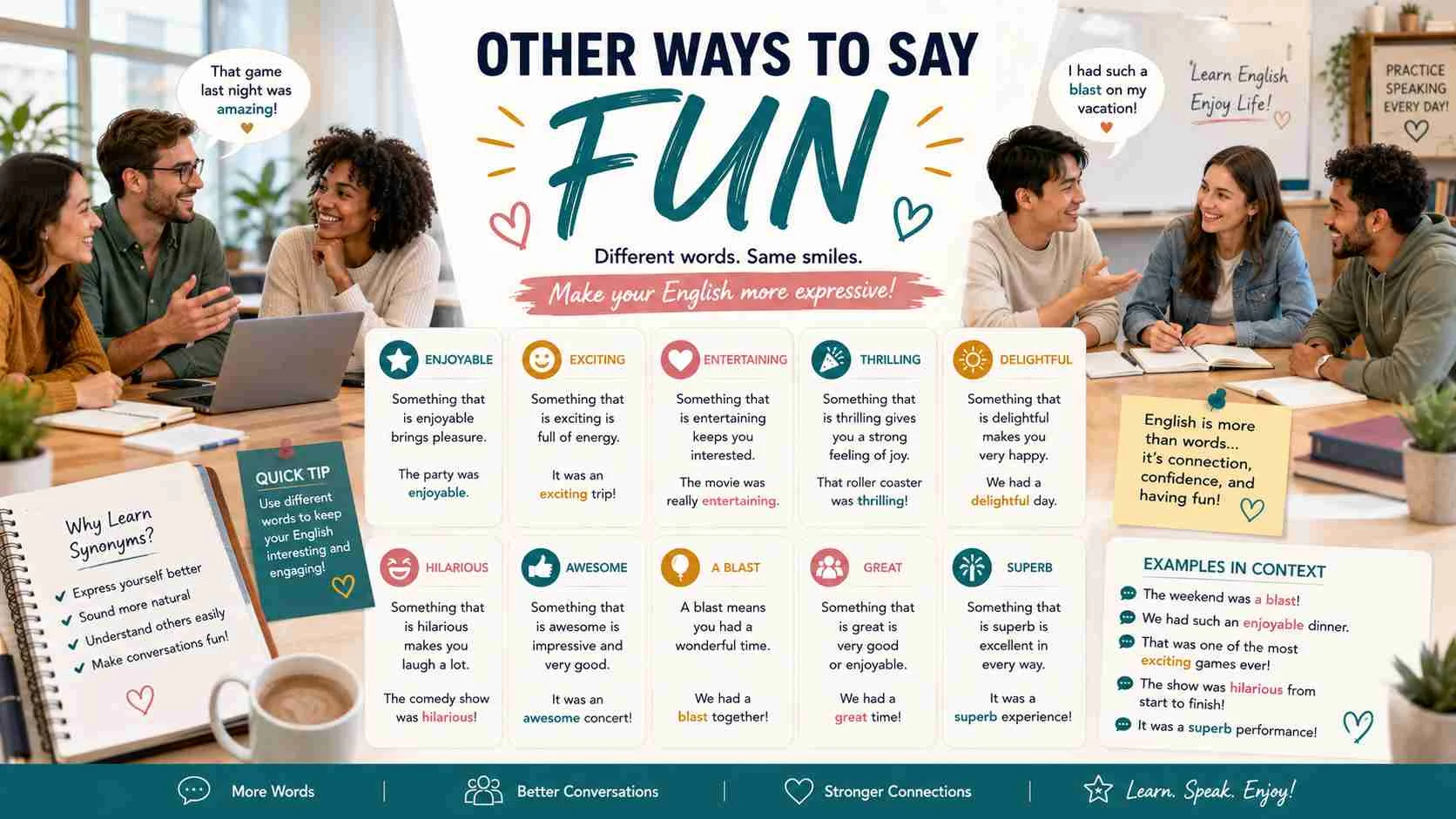
If you’re looking for other ways to say fun, some of the best alternatives include enjoyable, entertaining, exciting, delightful and amusing. Choosing the right expression helps you sound more natural, improve your vocabulary and express excitement in English more confidently.
The word fun is one of the most common English words used to describe something enjoyable, entertaining, or exciting. While it’s easy to understand and widely accepted, using it repeatedly can make your speech and writing sound repetitive.
Learning alternatives to fun helps you communicate more precisely. Different situations call for different words, you’re chatting with friends, writing professionally, or describing memorable experiences.
Expanding your vocabulary with other ways to say fun also helps you express excitement in English naturally while improving both spoken and written communication.
Formal Alternatives to “Fun”
- Enjoyable
- Delightful
- Pleasant
- Rewarding
Pro Tip: Use formal alternatives when writing emails, reports, presentations, or academic content to sound more polished.
Casual Alternatives
- Awesome
- Cool
- A blast
- Great time
Pro Tip: Casual phrases work best with friends, family, and relaxed conversations.
Professional Alternatives
- Engaging
- Interactive
- Interesting
- Rewarding
Pro Tip: Professional reaction phrases sound more appropriate during meetings, workshops, and workplace communication.
Informal Expressions
- A ton of fun
- Super enjoyable
- Loads of fun
- A good laugh
Pro Tip: Informal expressions in English create friendly conversations but should be avoided in formal documents.
Common Mistakes When Using “Fun”
1. Using “fun” in formal business writing
Example:
“The conference was fun.”
Better:
“The conference was engaging.”
2. Repeating “fun” too often
Example:
“The trip was fun. The games were fun. Dinner was fun.”
3. Using “fun” for serious achievements
Example:
“Winning the award was fun.”
Better:
“Winning the award was rewarding.”
4. Choosing “fun” instead of “interesting”
Example:
“The seminar was fun.”
Better:
“The seminar was informative and engaging.”
5. Using slang in professional settings
Example:
“The meeting was awesome.”
Better:
“The meeting was productive and engaging.”
“The right word doesn’t just describe your experience it improves how confidently you communicate.”
What Does “Fun” Mean?
Fun is an adjective and noun that describes something enjoyable, entertaining, or amusing.
Example:
“We had fun during the weekend picnic.”
When to Use “Fun”
- Talking with friends
- Describing activities
- Social media captions
- Family conversations
- School discussions
- Casual storytelling
Spoken: Very common
Written: Acceptable in informal writing
Formal: Limited use
Is It Professional or Polite to Say “Fun”?
The word fun is polite but generally too informal for professional communication.
Business example:
“Our workshop was engaging and highly interactive.”
Polite? ✔ Yes
Professional? ❌ No (in most cases)
Pros and Cons of Using “Fun”
Pros
- Simple and natural
- Friendly tone
- Common usage
- Easy to understand
Cons
- Too informal for work
- Overused
- Limited emotional range
- Not suitable for formal writing
“Professional English isn’t about difficult vocabulary. It’s about choosing the right word for the situation.”
Other Ways to Say “Fun” With Examples
These other ways to say fun help you sound more fluent, confident, and natural.
Choose the expression based on your audience, tone, and situation.
1. Phrase | Enjoyable
- Meaning: Pleasant and satisfying.
- Explanation: Suitable for formal and casual situations.
- Example Sentence: The workshop was enjoyable.
- Best Use: Formal events
- Worst Use: Sarcastic jokes
- Tone: Positive, polite
- Context Variability: Casual, professional, spoken
2. Phrase | Entertaining
- Meaning: Holds attention pleasantly.
- Explanation: Great for shows and presentations.
- Example Sentence: The speaker was entertaining.
- Best Use: Performances
- Worst Use: Serious reports
- Tone: Positive, lively
- Context Variability: Casual, spoken, professional
3. Phrase | Exciting
- Meaning: Creates enthusiasm.
- Explanation: Expresses high energy.
- Example Sentence: The adventure was exciting.
- Best Use: Activities
- Worst Use: Routine tasks
- Tone: Energetic, enthusiastic
- Context Variability: Casual, spoken
4. Phrase | Delightful
- Meaning: Highly pleasing.
- Explanation: More elegant than fun.
- Example Sentence: The evening was delightful.
- Best Use: Formal writing
- Worst Use: Sports slang
- Tone: Warm, refined
- Context Variability: Professional, written
5. Phrase | Amusing
- Meaning: Causes laughter.
- Explanation: Perfect for humor.
- Example Sentence: His story was amusing.
- Best Use: Funny stories
- Worst Use: Serious meetings
- Tone: Lighthearted, friendly
- Context Variability: Casual, spoken
6. Phrase | Engaging
- Meaning: Captures attention.
- Explanation: Common in business English.
- Example Sentence: The session was engaging.
- Best Use: Meetings
- Worst Use: Parties
- Tone: Professional, positive
- Context Variability: Professional, spoken
7. Phrase | Fascinating
- Meaning: Extremely interesting.
- Explanation: Stronger than fun.
- Example Sentence: The documentary was fascinating.
- Best Use: Learning
- Worst Use: Casual jokes
- Tone: Intelligent, positive
- Context Variability: Written, professional
8. Phrase | Lively
- Meaning: Full of energy.
- Explanation: Describes active environments.
- Example Sentence: The festival was lively.
- Best Use: Events
- Worst Use: Reports
- Tone: Bright, energetic
- Context Variability: Casual
9. Phrase | Memorable
- Meaning: Worth remembering.
- Explanation: Highlights lasting impact.
- Example Sentence: It was a memorable trip.
- Best Use: Travel
- Worst Use: Everyday tasks
- Tone: Positive
- Context Variability: Casual, professional
10. Phrase | Thrilling
- Meaning: Extremely exciting.
- Explanation: Indicates strong excitement.
- Example Sentence: The ride was thrilling.
- Best Use: Adventures
- Worst Use: Office work
- Tone: Energetic
- Context Variability: Spoken
11. Phrase | Incredible
- Meaning: Very impressive.
- Explanation: Shows admiration.
- Example Sentence: The concert was incredible.
- Best Use: Experiences
- Worst Use: Formal reports
- Tone: Enthusiastic
- Context Variability: Casual
12. Phrase | Amazing
- Meaning: Extremely good.
- Explanation: Widely used.
- Example Sentence: The trip was amazing.
- Best Use: Daily speech
- Worst Use: Academic writing
- Tone: Friendly
- Context Variability: Casual
13. Phrase | Wonderful
- Meaning: Extremely pleasant.
- Explanation: Polite alternative.
- Example Sentence: We had a wonderful evening.
- Best Use: Formal conversations
- Worst Use: Slang
- Tone: Warm
- Context Variability: Professional
14. Phrase | Pleasant
- Meaning: Comfortable and enjoyable.
- Explanation: Neutral choice.
- Example Sentence: The meeting was pleasant.
- Best Use: Business
- Worst Use: Extreme excitement
- Tone: Calm
- Context Variability: Professional
15. Phrase | Rewarding
- Meaning: Personally satisfying.
- Explanation: Often used professionally.
- Example Sentence: Teaching is rewarding.
- Best Use: Careers
- Worst Use: Comedy
- Tone: Professional
- Context Variability: Professional
16. Phrase | Stimulating
- Meaning: Mentally engaging.
- Explanation: Academic usage.
- Example Sentence: The discussion was stimulating.
- Best Use: Education
- Worst Use: Parties
- Tone: Intellectual
- Context Variability: Professional
17. Phrase | Inspiring
- Meaning: Motivates or encourages positive thoughts or actions.
- Explanation: Use it when someone or something leaves you feeling motivated.
- Example Sentence: Her success story was inspiring and encouraged everyone to follow their dreams.
- Best Use: Motivational events
- Worst Use: Comedy shows
- Tone: Positive, uplifting, encouraging
- Context Variability: Casual, professional, spoken
18. Phrase | Refreshing
- Meaning: Pleasantly different or energizing.
- Explanation: Describes experiences that make you feel renewed or pleasantly surprised.
- Example Sentence: It was refreshing to spend the weekend away from technology.
- Best Use: New experiences
- Worst Use: Intense adventures
- Tone: Calm, positive, natural
- Context Variability: Casual, professional, spoken
19. Phrase | Captivating
- Meaning: Extremely interesting and attention-grabbing.
- Explanation: Ideal for describing stories, performances, or presentations.
- Example Sentence: The documentary was so captivating that everyone watched until the end.
- Best Use: Movies, speeches
- Worst Use: Routine tasks
- Tone: Strong, engaging, descriptive
- Context Variability: Professional, written, spoken
20. Phrase | Charming
- Meaning: Pleasant in an attractive or delightful way.
- Explanation: Often describes people, places, or experiences with warmth.
- Example Sentence: The small village was charming and full of friendly people.
- Best Use: Travel, places
- Worst Use: Competitive sports
- Tone: Warm, elegant, pleasant
- Context Variability: Casual, professional, written
21. Phrase| Enjoyment Filled
- Meaning: Full of happiness and enjoyment.
- Explanation: Describes activities or events that bring continuous pleasure.
- Example Sentence: The family picnic was an enjoyment filled afternoon for everyone.
- Best Use: Family events
- Worst Use: Business reports
- Tone: Cheerful, positive, descriptive
- Context Variability: Casual, spoken
22. Phrase | Pleasantly Surprising
- Meaning: Better than expected in a positive way.
- Explanation: Use when something unexpectedly turns out to be enjoyable.
- Example Sentence: The workshop was pleasantly surprising because it was highly interactive.
- Best Use: Reviews
- Worst Use: Predictable situations
- Tone: Positive, appreciative, natural
- Context Variability: Professional, casual, written
23. Phrase | A Blast
- Meaning: Extremely fun and exciting.
- Explanation: A common informal expression in English for a great experience.
- Example Sentence: We had a blast at the beach during the holiday.
- Best Use: Friends, parties
- Worst Use: Formal meetings
- Tone: Casual, energetic, enthusiastic
- Context Variability: Casual, spoken
24. Phrase | A Good Time
- Meaning: An enjoyable experience.
- Explanation: A simple phrase suitable for everyday conversations.
- Example Sentence: Everyone had a good time at the birthday celebration.
- Best Use: Social events
- Worst Use: Formal documents
- Tone: Friendly, relaxed, positive
- Context Variability: Casual, spoken
25. Phrase | Entertaining to Watch
- Meaning: Interesting and enjoyable to watch.
- Explanation: Best used for movies, sports, and performances.
- Example Sentence: The match was entertaining to watch from beginning to end.
- Best Use: Sports, movies
- Worst Use: Written reports
- Tone: Positive, descriptive, natural
- Context Variability: Casual, professional
26. Phrase | Full of Laughs
- Meaning: Filled with humor and laughter.
- Explanation: Describes funny experiences that make people laugh often.
- Example Sentence: The comedy show was full of laughs from start to finish.
- Best Use: Comedy events
- Worst Use: Serious discussions
- Tone: Humorous, cheerful, lively
- Context Variability: Casual, spoken
27. Phrase | Worth Experiencing
- Meaning: Deserving to be tried or enjoyed.
- Explanation: Recommends an activity because it offers a valuable experience.
- Example Sentence: The cultural festival is definitely worth experiencing at least once.
- Best Use: Recommendations
- Worst Use: Everyday routines
- Tone: Positive, encouraging, informative
- Context Variability: Professional, casual, written
28. Phrase | Action Packed
- Meaning: Full of excitement and nonstop activity.
- Explanation: Commonly used for movies, games, and adventures.
- Example Sentence: The action packed movie kept the audience excited throughout.
- Best Use: Entertainment
- Worst Use: Office meetings
- Tone: Exciting, energetic, dramatic
- Context Variability: Casual, spoken
29. Phrase | Full of Energy
- Meaning: Lively and energetic.
- Explanation: Describes people, events, or places with lots of enthusiasm.
- Example Sentence: The music festival was full of energy from beginning to end.
- Best Use: Events
- Worst Use: Quiet ceremonies
- Tone: Vibrant, enthusiastic, lively
- Context Variability: Casual, professional, spoken
30. Phrase | Unforgettable
- Context Variability: Casual, professional, written
- Meaning: So enjoyable or meaningful that it will always be remembered.
- Explanation: Highlights memorable experiences with lasting impact.
- Example Sentence: Our vacation was unforgettable because of the amazing people we met.
- Best Use: Travel, celebrations
- Worst Use: Ordinary tasks
- Tone: Emotional, positive, memorable
“Using precise vocabulary makes your English sound fluent instead of repetitive.”
“Small vocabulary upgrades create a big difference in professional communication.”
“Native speakers choose words based on context, not just meaning.”
Mini Quiz
1. Which word is most suitable for a business presentation?
A. Awesome
B. Engaging
C. Super fun
D. Epic
Answer: B
2. Which alternative best describes an exciting adventure?
A. Pleasant
B. Thrilling
C. Rewarding
D. Stimulating
Answer: B
3. Which word is best for describing a training session?
A. Engaging
B. Cool
C. A blast
D. Epic
Answer: A
Comparison Table | Top Alternatives
| Phrase | Tone | Best Use |
|---|---|---|
| Enjoyable | Professional | Meetings |
| Engaging | Professional | Workshops |
| Delightful | Formal | Writing |
| Pleasant | Neutral | Business |
| Rewarding | Professional | Careers |
| Exciting | Energetic | Adventures |
| Entertaining | Friendly | Presentations |
| Memorable | Positive | Travel |
| Thrilling | Energetic | Activities |
| Fascinating | Intelligent | Learning |
FAQs
What are the best other ways to say fun?
Some of the best alternatives include enjoyable, entertaining, engaging, delightful, exciting, fascinating, memorable, rewarding, pleasant, and thrilling. Each fits different situations depending on tone and audience.
Which alternative to “fun” is most professional?
Words like engaging, rewarding, interactive, enjoyable, and pleasant are considered better professional reaction phrases because they sound polished and appropriate in workplace communication.
Can I use “fun” in business emails?
While fun is polite, it is usually too informal for professional writing. Replacing it with engaging or enjoyable creates a stronger impression.
How can I express excitement in English without saying “fun”?
You can express excitement in English by using words such as thrilling, amazing, incredible, exciting, memorable, or captivating, depending on the context.
Why should I learn alternatives to fun?
Learning alternatives to fun improves your vocabulary, avoids repetition, helps you sound more fluent, and allows you to choose expressions that match formal, casual, or professional situations.
Conclusion
Learning other ways to say fun helps you communicate with greater precision, confidence, and professionalism. Instead of relying on a single word, you’ll have dozens of expressions that fit different audiences and situations.
Practice using these alternatives every day in conversations, emails, and writing. Paying attention to tone is one of the fastest ways to sound more natural and fluent in English.
Discover More Related Articles:
- Other Ways to Say No Pressure | Friendly Phrases That Work In 2026
- Other Ways to Say Boobs | Polite Lines for Any Situation In 2026
- Other Ways to Say Yes | Talk Like a Natural Speaker In 2026