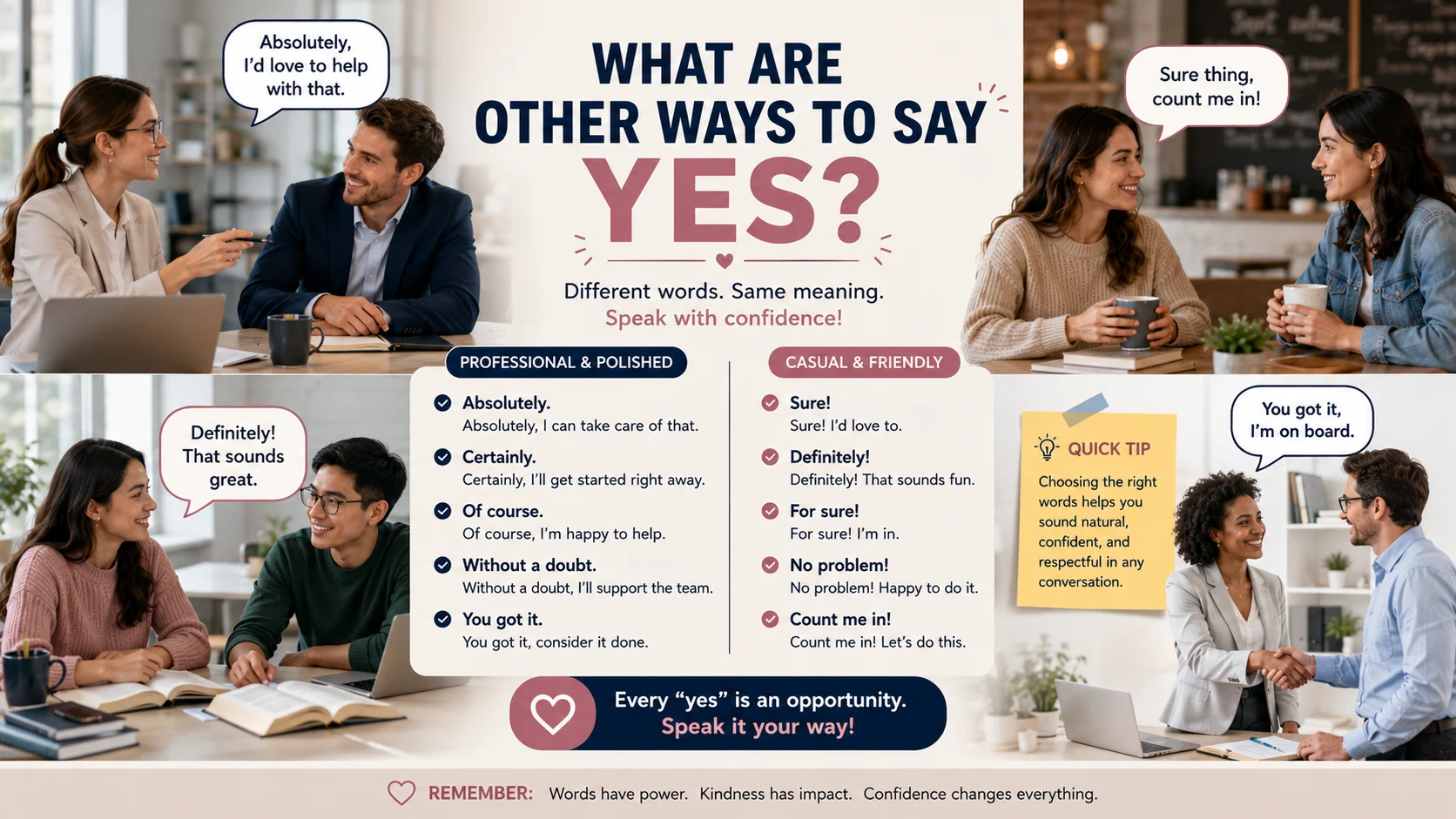
If you want better alternatives to “yes,” try phrases like absolutely, certainly, definitely, of course and I’d be happy to. These expressions help you sound more natural, professional and fluent in different situations.
The word “yes” is one of the most common responses in English. People use it to agree, accept offers, show approval, or confirm information in both spoken and written communication.
However, using the same response repeatedly can sound repetitive or too casual. Learning other ways to say yes helps you express excitement in English more naturally and communicate with better tone awareness.
You are speaking with friends, writing emails, or attending business meetings, knowing alternatives to what are other ways to say yes can improve your fluency and confidence.
“Small vocabulary changes can make your English sound more polished and professional.”
Formal Alternatives to “What Are Other Ways to Say Yes”
Common Formal Phrases
- Certainly
- Absolutely
- Indeed
- By all means
Pro Tip
Use formal alternatives in emails, interviews, presentations, and customer communication to sound more professional and respectful.
Casual Alternatives
Common Casual Phrases
- Sure
- Yep
- Yeah
- Sounds good
Pro Tip
Casual expressions work best with friends, family, and relaxed conversations. Avoid them in formal business writing.
“Choosing the right tone is just as important as choosing the right words.”
Professional Alternatives
Common Professional Phrases
- I’d be happy to
- Certainly
- That works for me
- I agree
Pro Tip
Professional reaction phrases should sound polite, clear, and confident without being overly emotional.
Informal Expressions
Common Informal Expressions in English
- You bet
- Totally
- No problem
- For sure
Pro Tip
Informal expressions in English are useful in everyday conversations but may sound unprofessional in workplaces.
Common Mistakes When Using “Yes”
1. Using “yeah” in formal emails
Example: “Yeah, I can attend the meeting.”
Better: “Certainly, I can attend the meeting.”
2. Repeating “yes” too often
Example: “Yes, yes, yes, that’s fine.”
This can sound unnatural or impatient.
3. Using overly casual phrases at work
Example: “Totally!”
This may sound unprofessional during meetings.
4. Giving unclear agreement
Example: “Maybe yes.”
This creates confusion.
5. Using slang in professional settings
Example: “Yup!”
Avoid slang in interviews or official communication.
“Professional English often depends on clarity, confidence and tone.”
What Does “What Are Other Ways to Say Yes” Mean?
The phrase refers to alternatives people can use instead of the word “yes” in English conversations and writing.
“Yes” is an agreement word used to confirm, accept, approve, or respond positively.
Example Sentence
“Yes, I understand your point.”
When to Use “Yes”
You can use “yes” in many situations, including:
- Accepting invitations
- Agreeing in conversations
- Confirming information
- Responding to questions
- Approving requests
Spoken vs Written
- Spoken English: More flexible and casual
- Written English: Often requires more professional wording
Formal vs Informal
- Formal: “Certainly”
- Informal: “Yep”
Is It Professional or Polite to Say “Yes”?
“Yes” is polite in most situations because it clearly shows agreement or acceptance.
However, it is not always the most professional choice in business communication. More polished alternatives often sound better in workplaces.
Business Example
“Yes, I can complete the report today.”
Better professional version:
“Certainly, I can complete the report today.”
- Polite? ✔️ Yes
- Professional? ❌ No (in most cases)
Pros and Cons of Using “Yes”
Pros
- Simple and natural
- Friendly tone
- Common usage
- Easy to understand
Cons
- Too informal for work
- Overused
- Limited emotional range
- Not suitable for formal writing
“The best English speakers adjust their tone depending on the situation.”
Other Ways to Say “Yes” With Examples
These alternatives will help you sound more fluent, confident, and natural in different situations.
Use them according to tone, context, and audience to express excitement in English, agreement, or approval.
1. Phrase | Absolutely
- Meaning: Strong agreement or approval.
- Explanation: Adds enthusiasm and confidence.
- Example Sentence: “Absolutely, I’d love to join the event.”
- Best Use: Strong agreement
- Worst Use: Legal writing
- Tone: Confident, positive
- Context Variability: Casual, professional, spoken
2. Phrase | Certainly
- Meaning: Polite confirmation or agreement.
- Explanation: Common in formal communication.
- Example Sentence: “Certainly, I can help you with that.”
- Best Use: Business emails
- Worst Use: Casual chats
- Tone: Formal, polite
- Context Variability: Professional, written, spoken
3. Phrase | Of Course
- Meaning: Agreement that feels natural or expected.
- Explanation: Friendly and reassuring.
- Example Sentence: “Of course, you can borrow my notes.”
- Best Use: Friendly support
- Worst Use: Strict authority
- Tone: Warm, helpful
- Context Variability: Casual, spoken, professional
4. Phrase | Definitely
- Meaning: Strong certainty or approval.
- Explanation: Shows confidence and enthusiasm.
- Example Sentence: “I’ll definitely attend the workshop.”
- Best Use: Enthusiastic response
- Worst Use: Formal contracts
- Tone: Energetic, confident
- Context Variability: Casual, spoken, workplace
5. Phrase | Sure
- Meaning: Simple agreement.
- Explanation: Common in everyday conversations.
- Example Sentence: “Sure, I can send the file.”
- Best Use: Casual requests
- Worst Use: Formal interviews
- Tone: Relaxed, friendly
- Context Variability: Casual, spoken
6. Phrase | I’d Be Happy To
- Meaning: Polite willingness to help.
- Explanation: Sounds professional and warm.
- Example Sentence: “I’d be happy to assist with the project.”
- Best Use: Customer service
- Worst Use: Fast texting
- Tone: Professional, polite
- Context Variability: Professional, written
7. Phrase | Sounds Good
- Meaning: Agreement with a suggestion or plan.
- Explanation: Common in casual discussions.
- Example Sentence: “Meeting at 3 PM sounds good.”
- Best Use: Plans, meetings
- Worst Use: Formal reports
- Tone: Casual, agreeable
- Context Variability: Spoken, casual
8. Phrase | Indeed
- Meaning: Formal agreement or confirmation.
- Explanation: Often used in professional English.
- Example Sentence: “Indeed, that strategy could work well.”
- Best Use: Formal discussion
- Worst Use: Teen slang
- Tone: Formal, thoughtful
- Context Variability: Professional, written
9. Phrase | By All Means
- Meaning: Permission or enthusiastic agreement.
- Explanation: Polite and encouraging.
- Example Sentence: “By all means, ask any questions.”
- Best Use: Formal permission
- Worst Use: Casual texting
- Tone: Respectful, formal
- Context Variability: Professional, spoken
10. Phrase | No Problem
- Meaning: Agreeing casually to help.
- Explanation: Friendly and informal.
- Example Sentence: “No problem, I’ll handle it.”
- Best Use: Friendly help
- Worst Use: Executive meetings
- Tone: Casual, relaxed
- Context Variability: Casual, spoken
“Fluent English is not about difficult words. It is about choosing the right expression for the situation.”
11. Phrase | I Agree
- Meaning: Direct agreement with an opinion.
- Explanation: Useful in discussions and meetings.
- Example Sentence: “I agree with your suggestion.”
- Best Use: Team meetings
- Worst Use: Emotional support
- Tone: Neutral, professional
- Context Variability: Professional, spoken
12. Phrase | That Works for Me
- Meaning: Acceptance of a plan or idea.
- Explanation: Common in workplace scheduling.
- Example Sentence: “Friday afternoon works for me.”
- Best Use: Scheduling
- Worst Use: Formal speeches
- Tone: Cooperative, professional
- Context Variability: Professional, casual
13. Phrase | Without a Doubt
- Meaning: Complete certainty.
- Explanation: Adds emphasis and confidence.
- Example Sentence: “Without a doubt, this is the best option.”
- Best Use: Strong confidence
- Worst Use: Formal reports
- Tone: Strong, confident
- Context Variability: Spoken, casual
14. Phrase | You Bet
- Meaning: Enthusiastic informal agreement.
- Explanation: Common in friendly conversations.
- Example Sentence: “You bet, I’ll be there.”
- Best Use: Friendly chats
- Worst Use: Professional emails
- Tone: Informal, energetic
- Context Variability: Casual, spoken
15. Phrase | Totally
- Meaning: Strong casual agreement.
- Explanation: Very common in spoken English.
- Example Sentence: “Totally, I understand your point.”
- Best Use: Informal talks
- Worst Use: Formal presentations
- Tone: Casual, expressive
- Context Variability: Spoken, informal
16. Phrase | For Sure
- Meaning: Confident confirmation.
- Explanation: Informal but common.
- Example Sentence: “For sure, I’ll call you later.”
- Best Use: Friendly replies
- Worst Use: Academic writing
- Tone: Relaxed, confident
- Context Variability: Casual, spoken
17. Phrase | Naturally
- Meaning: Agreement that feels obvious.
- Explanation: Slightly formal and elegant.
- Example Sentence: “Naturally, we support the proposal.”
- Best Use: Formal discussion
- Worst Use: Casual slang
- Tone: Formal, polished
- Context Variability: Professional, written
18. Phrase | Gladly
- Meaning: Happy willingness.
- Explanation: Warm and positive.
- Example Sentence: “I’ll gladly help with the presentation.”
- Best Use: Offering support
- Worst Use: Harsh criticism
- Tone: Warm, polite
- Context Variability: Spoken, professional
19. Phrase | Fine by Me
- Meaning: Acceptance without objection.
- Explanation: Relaxed and neutral.
- Example Sentence: “Changing the schedule is fine by me.”
- Best Use: Casual agreement
- Worst Use: Formal documents
- Tone: Casual, neutral
- Context Variability: Spoken, informal
20. Phrase | Agreed
- Meaning: Shared acceptance of an idea.
- Explanation: Short and professional.
- Example Sentence: “Agreed, we should move forward.”
- Best Use: Meetings
- Worst Use: Emotional talks
- Tone: Professional, direct
- Context Variability: Professional, spoken
21. Phrase | Okay
- Meaning: Basic agreement or acknowledgment.
- Explanation: Extremely common in daily English.
- Example Sentence: “Okay, I understand.”
- Best Use: Everyday replies
- Worst Use: Formal proposals
- Tone: Neutral, casual
- Context Variability: Spoken, casual
22. Phrase | All Right
- Meaning: Acceptance or approval.
- Explanation: Slightly more formal than “okay.”
- Example Sentence: “All right, let’s begin.”
- Best Use: Instructions
- Worst Use: Academic essays
- Tone: Neutral, calm
- Context Variability: Spoken, professional
23. Phrase | Very Well
- Meaning: Formal acceptance.
- Explanation: Often used in professional or serious settings.
- Example Sentence: “Very well, we will proceed.”
- Best Use: Formal approval
- Worst Use: Friendly texting
- Tone: Formal, serious
- Context Variability: Professional, written
24. Phrase | I’m In
- Meaning: Enthusiastic agreement to participate.
- Explanation: Common in social situations.
- Example Sentence: “I’m in for the weekend trip.”
- Best Use: Group plans
- Worst Use: Formal workplace
- Tone: Excited, informal
- Context Variability: Casual, spoken
25. Phrase | Consider It Done
- Meaning: Confident promise to complete something.
- Explanation: Shows reliability and action.
- Example Sentence: “Consider it done by tomorrow morning.”
- Best Use: Work tasks
- Worst Use: Casual greetings
- Tone: Professional, confident
- Context Variability: Professional, spoken
26. Phrase | Why Not
- Meaning: Casual acceptance.
- Explanation: Suggests openness to an idea.
- Example Sentence: “Why not, let’s try it.”
- Best Use: Casual suggestions
- Worst Use: Serious negotiations
- Tone: Relaxed, open
- Context Variability: Casual, spoken
27. Phrase | I Suppose So
- Meaning: Hesitant agreement.
- Explanation: Shows uncertainty.
- Example Sentence: “I suppose so, if necessary.”
- Best Use: Mild agreement
- Worst Use: Strong commitment
- Tone: Uncertain, soft
- Context Variability: Spoken, casual
28. Phrase | With Pleasure
- Meaning: Happy agreement to help.
- Explanation: Very polite and elegant.
- Example Sentence: “With pleasure, I’ll introduce you.”
- Best Use: Formal hospitality
- Worst Use: Quick texting
- Tone: Polite, elegant
- Context Variability: Professional, spoken
29. Phrase | Absolutely Sure
- Meaning: Complete certainty.
- Explanation: Strong reassurance.
- Example Sentence: “I’m absolutely sure this will work.”
- Best Use: Reassurance
- Worst Use: Legal writing
- Tone: Strong, positive
- Context Variability: Spoken, casual
30. Phrase | That’s Fine
- Meaning: Acceptance or approval.
- Explanation: Neutral and practical.
- Example Sentence: “That’s fine, we can reschedule.”
- Best Use: Flexible situations
- Worst Use: Excited responses
- Tone: Neutral, calm
- Context Variability: Casual, professional
“Learning multiple ways to say yes helps you sound fluent instead of repetitive.”
Mini Quiz / Self Check
1. Which phrase sounds most professional in an email?
A. Yep
B. Totally
C. Certainly
D. For sure
Answer: C. Certainly
2. Which phrase is best for casual spoken English?
A. Very well
B. You bet
C. Indeed
D. Naturally
Answer: B. You bet
3. Which phrase shows enthusiastic agreement?
A. I suppose so
B. Absolutely
C. Very well
D. That’s fine
Answer: B. Absolutely
4. Which expression should you avoid in formal meetings?
A. Agreed
B. Certainly
C. Totally
D. I agree
Answer: C. Totally
Comparison Table | Top Alternatives
| Phrase | Tone | Best Use |
|---|---|---|
| Absolutely | Confident | Strong agreement |
| Certainly | Formal | Business communication |
| Of course | Friendly | Helpful replies |
| Definitely | Energetic | Enthusiastic response |
| I’d be happy to | Professional | Customer service |
| Sounds good | Casual | Making plans |
| Indeed | Formal | Professional discussion |
| Agreed | Direct | Meetings |
| Consider it done | Confident | Work tasks |
| With pleasure | Polite | Formal hospitality |
FAQs
What are the best professional alternatives to “yes”?
Professional alternatives include “certainly,” “I’d be happy to,” “agreed,” and “that works for me.” These phrases sound more polished in workplace communication.
What are casual alternatives to “yes” in English?
Common casual alternatives include “sure,” “yep,” “totally,” “for sure,” and “sounds good.” These are popular in spoken English.
How can I express excitement in English instead of saying “yes”?
You can use phrases like “absolutely,” “definitely,” “I’m in,” or “you bet” to express excitement in English naturally.
Is it rude to say “yeah” instead of “yes”?
No, but “yeah” is informal. It is acceptable with friends but may sound unprofessional in formal settings.
Why should I learn other ways to say yes?
Learning alternatives to what are other ways to say yes improves fluency, prevents repetition, and helps you communicate with better tone and confidence.
Conclusion
Learning other ways to say yes can make your English sound more fluent, natural, and professional. Different situations require different tones, so using varied expressions helps you communicate more effectively.
Practice these alternatives daily in conversations, emails, and workplace communication. The more you use them, the more confident and natural your English will become.