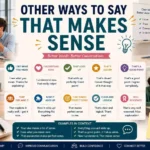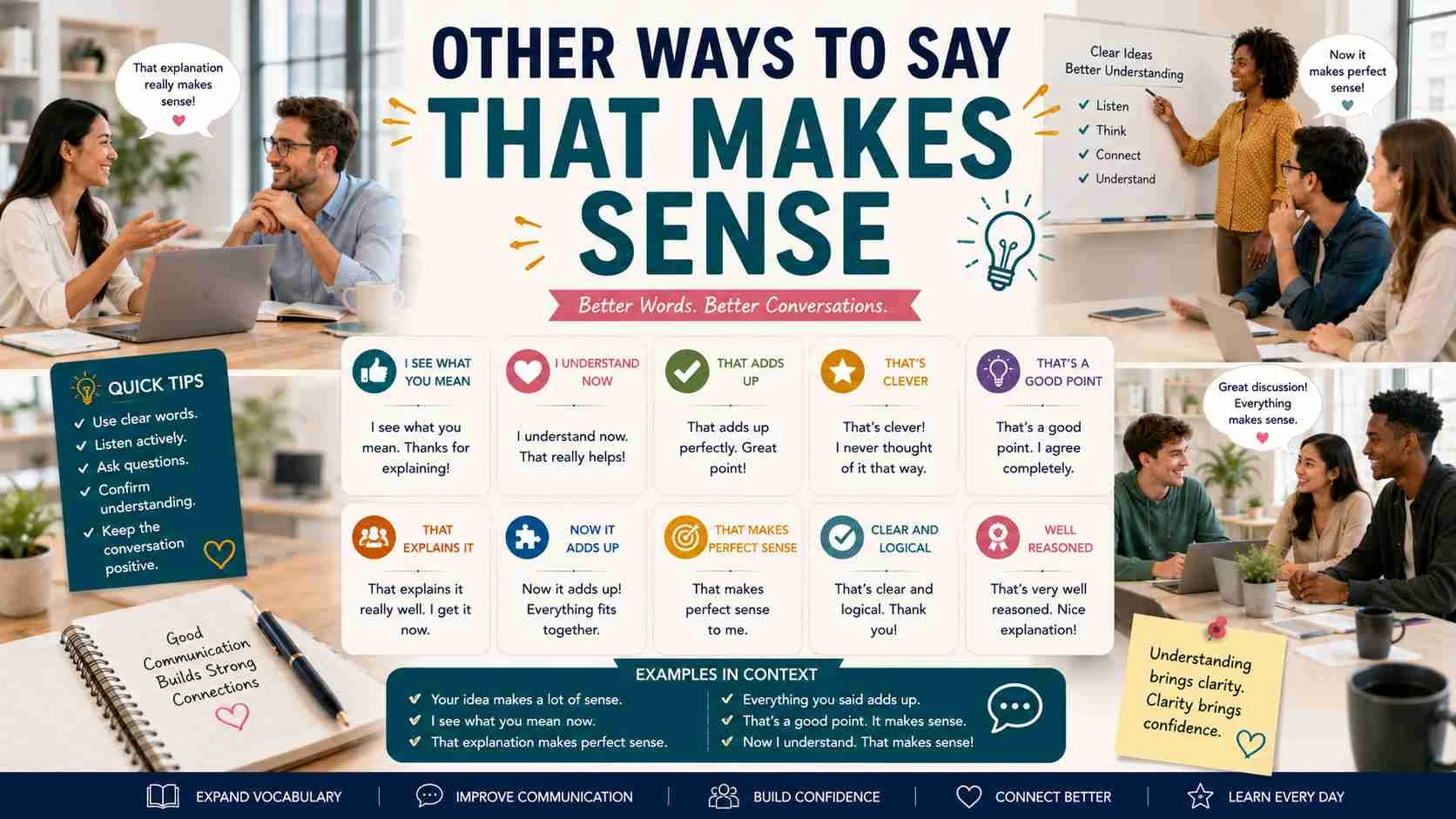
If you’re looking for other ways to say that makes sense, some of the best alternatives include I understand, That’s logical, I see your point, That adds up and I get what you mean. Choosing the right phrase helps you sound more natural, professional and confident in everyday conversations and workplace communication.
The phrase “that makes sense” is one of the most common English expressions used to show understanding or agreement. It tells the speaker that their explanation is logical or easy to understand.
Many English learners rely on this phrase because it is simple and useful. However, repeating the same expression can make your English sound repetitive.
Learning alternatives to “that makes sense” improves your vocabulary, strengthens communication skills, and helps you express excitement in English, agreement, or understanding with the right tone in different situations.
“The right phrase can make your English sound more confident and more natural.”
Formal Alternatives to “That Makes Sense”
- That is perfectly reasonable
- Your explanation is logical
- That appears to be correct
- I completely understand
- That is understandable
Pro Tip: Choose formal expressions in emails, meetings, interviews, and academic writing.
Casual Alternatives
- I get it
- Totally
- I see
- Got it
- Fair enough
Pro Tip: Casual expressions sound friendly but should be avoided in highly formal communication.
Professional Alternatives
- That aligns with our objectives
- I understand your reasoning
- That seems appropriate
- Your point is well taken
- I follow your reasoning
Pro Tip: Professional wording helps you sound respectful and polished during workplace discussions.
Informal Expressions
- Yep, that checks out
- Makes total sense
- I can see that
- Sounds right
- I hear you
Pro Tip: Informal phrases are ideal for conversations with friends and teammates but not formal reports.
“Professional English isn’t about using difficult words. It’s about choosing the right words.”
Common Mistakes When Using “That Makes Sense”
Saying it after every explanation
Example:
❌ Every reply: “That makes sense.”
Using it in formal reports
Example:
❌ “That makes sense according to company policy.”
Using it without understanding
Example:
❌ “That makes sense.” (Even when confused.)
Repeating it several times in one conversation
Example:
❌ “That makes sense…that makes sense…that makes sense.”
Using it when agreeing emotionally instead of logically
Example:
❌ “That makes sense you’re upset.”
What Does “That Makes Sense” Mean?
The phrase “that makes sense” means something is logical, understandable, or reasonable.
It is commonly used after hearing an explanation, reason, or opinion.
Example:
“Now that you’ve explained it, that makes sense.”
When to Use “That Makes Sense”
- After someone explains an idea
- During workplace discussions
- In classroom conversations
- During presentations
- While solving problems
- During friendly conversations
Spoken vs Written
- Spoken: Very common
- Written: Acceptable but alternatives often sound stronger
Formal vs Informal
- Formal: Limited use
- Informal: Very common
“Strong communicators know that tone matters just as much as vocabulary.”
Is It Professional or Polite to Say “That Makes Sense”?
The expression is polite because it acknowledges another person’s explanation.
However, in professional settings, more precise alternatives often sound better.
Business Example
“I understand your reasoning, and your proposal appears to be well supported.”
Polite? ✔️ Yes
Professional? ❌ No (in most cases)
Pros and Cons of Using “That Makes Sense”
Pros
- Simple and natural
- Friendly tone
- Common everyday expression
- Easy to understand
Cons
- Too informal for many business situations
- Overused
- Limited emotional range
- Not ideal for formal writing
“Expanding your vocabulary helps you communicate with confidence in every situation.”
Other Ways to Say “That Makes Sense” With Examples
These other ways to say that makes sense will help you sound more fluent, confident, and natural in conversations, emails, meetings, and presentations.
Use each expression according to the tone, audience, and situation.
1. Phrase | I understand
- Meaning: I clearly understand your point.
- Explanation: A professional and versatile alternative.
- Example Sentence: I understand why you chose this solution.
- Best Use: Business meetings
- Worst Use: Sarcasm
- Tone: Professional, polite
- Context Variability:
- Casual
- Professional
- Spoken
2. Phrase | I get it
- Meaning: I understand now.
- Explanation: Very common in conversation.
- Example Sentence: Oh, I get it now.
- Best Use: Friends
- Worst Use: Formal reports
- Tone: Casual, friendly
- Context Variability:
- Casual
- Spoken
- Informal
3. Phrase | I see your point
- Meaning: Your opinion is reasonable.
- Explanation: Shows respect for another viewpoint.
- Example Sentence: I see your point about the deadline.
- Best Use: Discussions
- Worst Use: Jokes
- Tone: Respectful, professional
- Context Variability:
- Casual
- Professional
- Spoken
4. Phrase | That’s logical
- Meaning: Your explanation is logical.
- Explanation: Good for analytical discussions.
- Example Sentence: That’s logical considering the data.
- Best Use: Meetings
- Worst Use: Casual jokes
- Tone: Formal, analytical
- Context Variability:
- Professional
- Spoken
- Academic
5. Phrase | That adds up
- Meaning: The information is consistent.
- Explanation: Often used after calculations or explanations.
- Example Sentence: Your explanation really adds up.
- Best Use: Problem solving
- Worst Use: Formal essays
- Tone: Casual, confident
- Context Variability:
- Casual
- Spoken
- Professional
6. Phrase | Fair enough
- Meaning: I accept your reasoning.
- Explanation: Friendly agreement.
- Example Sentence: Fair enough. Let’s do it.
- Best Use: Conversations
- Worst Use: Formal letters
- Tone: Relaxed, casual
- Context Variability:
- Casual
- Spoken
- Informal
7. Phrase | I follow your reasoning
- Meaning: I understand your logic.
- Explanation: Excellent in professional communication.
- Example Sentence: I follow your reasoning completely.
- Best Use: Business
- Worst Use: Text messages
- Tone: Professional, respectful
- Context Variability:
- Professional
- Meetings
- Spoken
8. Phrase | That seems reasonable
- Meaning: It appears sensible.
- Explanation: Polite workplace language.
- Example Sentence: That seems reasonable to me.
- Best Use: Workplace
- Worst Use: Humor
- Tone: Formal, polite
- Context Variability:
- Professional
- Written
- Spoken
9. Phrase | I can see that
- Meaning: I understand your viewpoint.
- Explanation: Friendly acknowledgment.
- Example Sentence: I can see that now.
- Best Use: Friends
- Worst Use: Reports
- Tone: Warm, casual
- Context Variability:
- Casual
- Spoken
- Professional
10. Phrase | That’s understandable
- Meaning: Your explanation is easy to understand.
- Explanation: Shows empathy.
- Example Sentence: That’s understandable given the circumstances.
- Best Use: Professional conversations
- Worst Use: Comedy
- Tone: Polite, empathetic
- Context Variability:
- Professional
- Casual
- Spoken
11. Phrase | That checks out
- Meaning: The explanation appears correct and believable.
- Explanation: This phrase confirms that the information seems accurate or logical.
- Example Sentence: Your timeline checks out with the project records.
- Best Use: Casual discussions
- Worst Use: Formal reports
- Tone: Casual, confident
- Context Variability:
- Casual
- Professional
- Spoken
12. Phrase | I completely agree
- Meaning: I fully share your opinion.
- Explanation: Use this when you strongly support someone’s idea or statement.
- Example Sentence: I completely agree with your recommendation.
- Best Use: Meetings
- Worst Use: Neutral analysis
- Tone: Positive, supportive
- Context Variability:
- Casual
- Professional
- Spoken
13. Phrase | I hear what you’re saying
- Meaning: I understand your point of view.
- Explanation: It shows that you are listening, even if you don’t fully agree.
- Example Sentence: I hear what you’re saying, and I’ll think about it.
- Best Use: Difficult conversations
- Worst Use: Formal reports
- Tone: Respectful, empathetic
- Context Variability:
- Casual
- Professional
- Spoken
14. Phrase | Absolutely
- Meaning: I completely agree or understand.
- Explanation: A short, enthusiastic response showing strong agreement.
- Example Sentence: Absolutely, that’s the best approach.
- Best Use: Conversations
- Worst Use: Academic writing
- Tone: Friendly, confident
- Context Variability:
- Casual
- Professional
- Spoken
15. Phrase | You’re right
- Meaning: Your opinion or statement is correct.
- Explanation: A direct way to acknowledge someone’s correctness.
- Example Sentence: You’re right about the deadline.
- Best Use: Everyday discussions
- Worst Use: Formal documents
- Tone: Honest, supportive
- Context Variability:
- Casual
- Professional
- Spoken
16. Phrase | I couldn’t agree more
- Meaning: I agree completely.
- Explanation: This phrase expresses the strongest level of agreement.
- Example Sentence: I couldn’t agree more with your suggestion.
- Best Use: Opinions
- Worst Use: Neutral feedback
- Tone: Strong, enthusiastic
- Context Variability:
- Casual
- Professional
- Spoken
17. Phrase | That sounds right
- Meaning: The explanation seems correct.
- Explanation: Use it when something appears reasonable or accurate.
- Example Sentence: That sounds right based on the information we have.
- Best Use: Discussions
- Worst Use: Legal writing
- Tone: Casual, agreeable
- Context Variability:
- Casual
- Professional
- Spoken
18. Phrase | It all fits together
- Meaning: Everything now connects logically.
- Explanation: Use it when separate pieces of information become clear.
- Example Sentence: After your explanation, it all fits together.
- Best Use: Problem solving
- Worst Use: Casual greetings
- Tone: Thoughtful, positive
- Context Variability:
- Casual
- Professional
- Spoken
19. Phrase | Everything is clear now
- Meaning: I fully understand the explanation.
- Explanation: This phrase shows that confusion has been removed.
- Example Sentence: Thanks for explaining. Everything is clear now.
- Best Use: Clarifications
- Worst Use: Debates
- Tone: Appreciative, clear
- Context Variability:
- Casual
- Professional
- Spoken
20. Phrase | Now I understand
- Meaning: I understand after receiving an explanation.
- Explanation: It emphasizes that the explanation helped.
- Example Sentence: Now I understand why the process changed.
- Best Use: Learning situations
- Worst Use: Formal reports
- Tone: Friendly, appreciative
- Context Variability:
- Casual
- Professional
- Spoken
21. Phrase | That’s a valid point
- Meaning: Your argument is reasonable and worth considering.
- Explanation: A respectful phrase commonly used in discussions and meetings.
- Example Sentence: That’s a valid point, and we should consider it.
- Best Use: Business discussions
- Worst Use: Casual jokes
- Tone: Professional, respectful
- Context Variability:
- Professional
- Casual
- Spoken
22. Phrase | Good point
- Meaning: You made an important observation.
- Explanation: A simple expression of agreement and appreciation.
- Example Sentence: Good point. We should review that section again.
- Best Use: Team discussions
- Worst Use: Formal essays
- Tone: Friendly, positive
- Context Variability:
- Casual
- Professional
- Spoken
23. Phrase | You’ve convinced me
- Meaning: Your explanation changed my opinion.
- Explanation: Use it when someone successfully persuades you.
- Example Sentence: You’ve convinced me to support the proposal.
- Best Use: Debates
- Worst Use: Formal reports
- Tone: Honest, appreciative
- Context Variability:
- Casual
- Professional
- Spoken
24. Phrase | That explains it
- Meaning: The reason is now clear.
- Explanation: Often used after learning the cause of something.
- Example Sentence: That explains why the system was delayed.
- Best Use: Clarifications
- Worst Use: Formal contracts
- Tone: Natural, conversational
- Context Variability:
- Casual
- Professional
- Spoken
25. Phrase | It all makes sense now
- Meaning: Everything is finally understandable.
- Explanation: Shows that all confusion has been resolved.
- Example Sentence: After your presentation, it all makes sense now.
- Best Use: Presentations
- Worst Use: Legal writing
- Tone: Positive, relieved
- Context Variability:
- Casual
- Professional
- Spoken
26. Phrase | I appreciate the explanation
- Meaning: Thank you for explaining clearly.
- Explanation: A polite and professional response.
- Example Sentence: I appreciate the explanation. It was very helpful.
- Best Use: Business emails
- Worst Use: Casual jokes
- Tone: Professional, grateful
- Context Variability:
- Professional
- Written
- Spoken
27. Phrase | Thanks for clarifying
- Meaning: Thank you for making the information clearer.
- Explanation: Common in workplace communication and everyday conversations.
- Example Sentence: Thanks for clarifying the meeting schedule.
- Best Use: Workplace
- Worst Use: Formal reports
- Tone: Polite, appreciative
- Context Variability:
- Casual
- Professional
- Spoken
28. Phrase | Your reasoning is solid
- Meaning: Your logic is strong and convincing.
- Explanation: A professional way to compliment someone’s explanation.
- Example Sentence: Your reasoning is solid, so I support your proposal.
- Best Use: Meetings
- Worst Use: Casual texting
- Tone: Professional, respectful
- Context Variability:
- Professional
- Academic
- Spoken
29. Phrase | I understand your perspective
- Meaning: I understand how you see the situation.
- Explanation: Shows empathy and respect for another viewpoint.
- Example Sentence: I understand your perspective, even though I have a different opinion.
- Best Use: Conflict resolution
- Worst Use: Humor
- Tone: Respectful, empathetic
- Context Variability:
- Professional
- Casual
- Spoken
30. Phrase | That seems accurate
- Meaning: The information appears to be correct.
- Explanation: A formal expression used to acknowledge accuracy.
- Example Sentence: That seems accurate based on the latest report.
- Best Use: Professional reviews
- Worst Use: Casual jokes
- Tone: Formal, objective
- Context Variability:
- Professional
- Written
- Spoken
“Small vocabulary upgrades create big improvements in fluent English.”
Mini Quiz
1. Which phrase is most professional?
A. I get it
B. I follow your reasoning
C. Cool
Answer: B
2. Which phrase is best for friends?
A. I get it
B. Your reasoning is logical
C. That appears reasonable
Answer: A
3. Which phrase fits a business email?
A. Totally
B. I understand your reasoning
C. Yep
Answer: B
Comparison Table | Top Alternatives
| Phrase | Tone | Best Use |
|---|---|---|
| I understand | Professional | Meetings |
| I see your point | Respectful | Discussions |
| That’s logical | Formal | Analysis |
| I follow your reasoning | Professional | Business |
| That seems reasonable | Polite | Workplace |
| I get it | Casual | Friends |
| Fair enough | Relaxed | Conversation |
| That adds up | Casual | Problem solving |
| That’s understandable | Empathetic | Supportive talks |
| That checks out | Informal | Everyday speech |
FAQs
What are the best other ways to say “that makes sense”?
Some of the best alternatives include I understand, I see your point, That’s logical, That adds up, and I follow your reasoning. These expressions fit different levels of formality and help you sound more fluent.
Is “that makes sense” professional?
It is polite but only moderately professional. In business communication, phrases such as I understand your reasoning or That appears reasonable often sound more polished.
What is a formal alternative to “that makes sense”?
Formal alternatives include That is perfectly reasonable, Your explanation is logical, I follow your reasoning, and That appears to be correct.
Can I use “that makes sense” in emails?
Yes, but in professional emails it is usually better to choose more formal alternatives to that makes sense, especially when writing to clients, managers, or executives.
Why should I learn other ways to say “that makes sense”?
Learning other ways to say that makes sense improves fluency, expands your vocabulary, strengthens professional reaction phrases, and helps you choose the right tone for every situation.
Conclusion
Learning other ways to say that makes sense helps you become a more confident English speaker and writer. You’re talking with friends, writing emails, or participating in business meetings, choosing the right expression makes your communication clearer and more professional.
Practice these alternatives regularly, pay attention to tone, and use each phrase in the appropriate context. Over time, you’ll naturally sound more fluent while improving both your spoken and written English.
Discover More Related Articles:
- Other Ways to Say God Bless | Heartfelt Words for Every Occasion In 2026
- Other Ways to Say I Can’t Wait | Exciting Alternatives You’ll Love In 2026
- Other Ways to Say Supported | Fresh Alternatives You’ll Actually Use In 2026