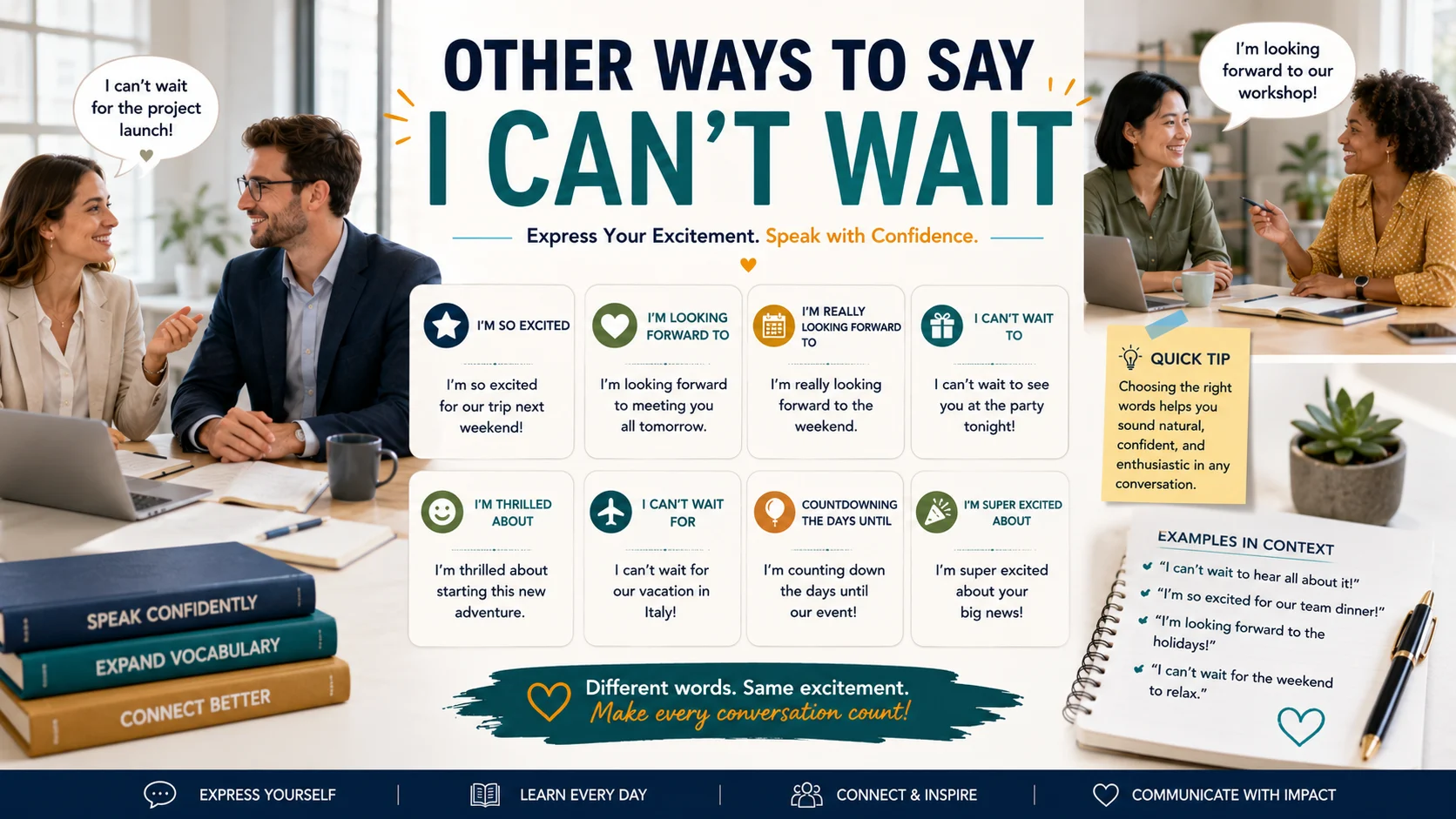
Looking for other ways to say I can’t wait? Some of the best alternatives include I’m looking forward to it, I’m excited, I can hardly wait, I’m eager to and I can’t contain my excitement. These expressions help you sound more natural, professional and fluent while expressing excitement in English.
The phrase “I can’t wait” is one of the most common ways to express excitement in English. People use it when they are eagerly anticipating something enjoyable, important, or meaningful.
Although the phrase is perfectly natural, using the same expression repeatedly can make your English sound repetitive. Learning alternatives to other ways to say I can’t wait allows you to communicate with greater confidence and variety in both speaking and writing.
You’re chatting with friends, writing professional emails, or preparing for an interview, knowing different ways to express excitement in English helps you match the right tone for every situation.
“The right expression doesn’t just show excitement it shows confidence and fluency.”
Formal Alternatives to “I Can’t Wait”
- I look forward to…
- I eagerly anticipate…
- I am enthusiastic about…
- I await with great interest…
Pro Tip: Choose these expressions for business emails, academic writing, and formal conversations where professionalism matters.
Casual Alternatives
- I’m so excited.
- Can’t wait!
- This is going to be awesome.
- I’m counting down the days.
Pro Tip: Casual expressions work best with friends, family, and everyday conversations.
Professional Alternatives
- I look forward to hearing from you.
- I anticipate your response.
- I’m eager to collaborate.
- I’m excited about this opportunity.
Pro Tip: Replace “I can’t wait” with these phrases whenever you’re communicating with clients, colleagues, or employers.
Informal Expressions
- I’m pumped.
- I’m thrilled.
- I’m buzzing.
- I’m beyond excited.
Pro Tip: Informal expressions create an energetic tone but should usually be avoided in formal business communication.
“Professional English isn’t about sounding complicated it’s about choosing the right tone.”
What Does “I Can’t Wait” Mean?
The phrase “I can’t wait” means you are extremely excited or eager for something to happen. It expresses strong anticipation rather than literal impatience.
Grammar: It is an idiomatic expression followed by for + noun or to + verb.
Example:
I can’t wait to start my new job.
When to Use “I Can’t Wait”
You can use this phrase in many everyday situations, including:
- Before a vacation
- Waiting for a birthday
- Looking forward to a concert
- Starting a new job
- Meeting friends
- Receiving good news
- Celebrating holidays
- Watching a movie release
Spoken vs Written
- Very common in spoken English.
- Suitable for informal writing, texts, and social media.
- Less suitable for formal business communication.
Formal vs Informal
- Casual conversations ✔
- Family messages ✔
- Friendly emails ✔
- Business emails Usually No
- Academic writing Rarely
Is It Professional or Polite to Say “I Can’t Wait”?
The phrase is polite, but it is usually not considered professional in formal workplace communication.
Business Example
Instead of:
I can’t wait to work with your team.
Say:
I look forward to working with your team.
Polite? ✔️ Yes
Professional? ❌ No (in most cases)
“Professional communication is about matching your words to your audience.”
Pros and Cons of Using “I Can’t Wait”
Pros
- Simple and natural
- Friendly tone
- Common everyday expression
- Easy for everyone to understand
Cons
- Too informal for many workplaces
- Frequently overused
- Limited emotional range
- Not ideal for formal writing
Other Ways to Say “I Can’t Wait” With Examples
These other ways to say I can’t wait will help you sound more fluent, confident, and natural in different situations.
Choose the expression that best matches your audience, purpose, and level of formality.
1. Phrase | I’m Looking Forward To
- Meaning: You are happily expecting something.
- Explanation: This is the most common professional alternative.
- Example Sentence: I’m looking forward to meeting everyone next week.
- Best Use: Business emails
- Worst Use: Extreme excitement
- Tone: Professional, polite, positive
- Context Variability:
- Casual: I’m looking forward to the weekend.
- Professional: I’m looking forward to our meeting.
- Spoken: I’m looking forward to seeing you.
2. Phrase | I’m Excited
- Meaning: You feel happy and enthusiastic.
- Explanation: A simple expression suitable for most situations.
- Example Sentence: I’m excited about the concert.
- Best Use: Everyday conversations
- Worst Use: Formal reports
- Tone: Friendly, energetic, natural
- Context Variability:
- Casual: I’m excited for tonight.
- Professional: I’m excited about joining the team.
- Spoken: I’m excited to be here.
3. Phrase | I Can Hardly Wait
- Meaning: Your excitement feels overwhelming.
- Explanation: Slightly stronger than “I can’t wait.”
- Example Sentence: I can hardly wait for the holidays.
- Best Use: Personal conversations
- Worst Use: Formal meetings
- Tone: Warm, enthusiastic, expressive
- Context Variability:
- Casual: I can hardly wait for dinner.
- Professional: Rarely used.
- Spoken: I can hardly wait to tell you.
4. Phrase | I’m Eager To
- Meaning: You strongly want to do something.
- Explanation: Works well in professional English.
- Example Sentence: I’m eager to learn from the new project.
- Best Use: Workplace
- Worst Use: Casual jokes
- Tone: Professional, confident, motivated
- Context Variability:
- Casual: I’m eager to try it.
- Professional: I’m eager to contribute.
- Spoken: I’m eager to get started.
5. Phrase | I’m Thrilled
- Meaning: You are extremely happy.
- Explanation: Shows stronger excitement than “I’m excited.”
- Example Sentence: I’m thrilled to receive your invitation.
- Best Use: Celebrations
- Worst Use: Everyday routine
- Tone: Positive, enthusiastic, expressive
- Context Variability:
- Casual: I’m thrilled about the trip.
- Professional: I’m thrilled to join your organization.
- Spoken: I’m thrilled for you.
“Small vocabulary upgrades make a big difference in fluent English.”
6. Phrase | I’m Counting Down the Days
- Meaning: You are eagerly waiting for a specific date.
- Explanation: Common for holidays and special events.
- Example Sentence: I’m counting down the days until summer vacation.
- Best Use: Upcoming events
- Worst Use: Business writing
- Tone: Cheerful, informal, expressive
- Context Variability:
- Casual: I’m counting down the days until Friday.
- Professional: Rarely used.
- Spoken: I’m counting down already.
7. Phrase | I’m Pumped
- Meaning: You feel full of energy and excitement.
- Explanation: A very informal American English expression.
- Example Sentence: I’m pumped for tonight’s game.
- Best Use: Friends
- Worst Use: Formal communication
- Tone: Informal, energetic, enthusiastic
- Context Variability:
- Casual: I’m pumped for the party.
- Professional: Avoid.
- Spoken: I’m pumped to go.
8. Phrase | I’m Anxious To
- Meaning: You are eager for something to happen.
- Explanation: In formal English, it often means eager rather than worried.
- Example Sentence: I’m anxious to hear your feedback.
- Best Use: Formal writing
- Worst Use: Situations involving actual worry
- Tone: Formal, eager, respectful
- Context Variability:
- Casual: I’m anxious to try it.
- Professional: I’m anxious to begin the project.
- Spoken: I’m anxious to know.
9. Phrase | I Await It With Excitement
- Meaning: You are eagerly anticipating something.
- Explanation: A formal and elegant expression.
- Example Sentence: I await the conference with excitement.
- Best Use: Formal speeches
- Worst Use: Casual texting
- Tone: Formal, polished, sophisticated
- Context Variability:
- Casual: Rarely used.
- Professional: Appropriate.
- Spoken: Occasionally.
10. Phrase | I Can’t Contain My Excitement
- Meaning: Your happiness is difficult to control.
- Explanation: Emphasizes intense enthusiasm.
- Example Sentence: I can’t contain my excitement about our vacation.
- Best Use: Celebrations
- Worst Use: Professional reports
- Tone: Emotional, enthusiastic, expressive
- Context Variability:
- Casual: I can’t contain my excitement.
- Professional: Limited use.
- Spoken: Very common.
11. Phrase | I’m Really Looking Forward To It
- Meaning: You are genuinely excited about something that will happen soon.
- Explanation: A warmer and more personal version of “I’m looking forward to it.”
- Example Sentence: I’m really looking forward to our family reunion next month.
- Best Use: Friendly emails
- Worst Use: Formal reports
- Tone: Friendly, positive, sincere
- Context Variability:
- Casual: I’m really looking forward to the concert.
- Professional: I’m really looking forward to working with your team.
- Spoken: I’m really looking forward to it.
12. Phrase | I’m Eagerly Awaiting
- Meaning: You are waiting with great anticipation.
- Explanation: This expression is more formal and suitable for professional communication.
- Example Sentence: I’m eagerly awaiting your response regarding the proposal.
- Best Use: Business emails
- Worst Use: Casual chats
- Tone: Formal, respectful, enthusiastic
- Context Variability:
- Casual: Rarely used.
- Professional: I’m eagerly awaiting your confirmation.
- Spoken: Limited use.
13. Phrase | I Have Been Waiting For This
- Meaning: You have anticipated something for a long time.
- Explanation: It emphasizes excitement after a long wait.
- Example Sentence: I have been waiting for this opportunity for years.
- Best Use: Personal stories
- Worst Use: Routine conversations
- Tone: Emotional, appreciative, genuine
- Context Variability:
- Casual: I’ve been waiting for this movie.
- Professional: I’ve been waiting for this opportunity.
- Spoken: Very common.
“Expanding your vocabulary allows you to express the same feeling with greater precision.”
14. Phrase | This Is Going To Be Amazing
- Meaning: You believe something will be exciting or enjoyable.
- Explanation: It builds enthusiasm before an event.
- Example Sentence: This is going to be an amazing weekend.
- Best Use: Friendly conversations
- Worst Use: Business meetings
- Tone: Enthusiastic, optimistic, casual
- Context Variability:
- Casual: This is going to be amazing.
- Professional: Avoid.
- Spoken: Very common.
15. Phrase | I’m Delighted
- Meaning: You feel great pleasure or happiness.
- Explanation: A polished alternative suitable for formal situations.
- Example Sentence: I’m delighted to accept your invitation.
- Best Use: Formal communication
- Worst Use: Sports events
- Tone: Polite, elegant, professional
- Context Variability:
- Casual: Less common.
- Professional: I’m delighted to join the discussion.
- Spoken: Occasionally.
16. Phrase | I Can’t Stop Thinking About It
- Meaning: You are constantly excited about something.
- Explanation: It highlights strong anticipation.
- Example Sentence: I can’t stop thinking about our upcoming vacation.
- Best Use: Personal conversations
- Worst Use: Professional presentations
- Tone: Emotional, excited, conversational
- Context Variability:
- Casual: I can’t stop thinking about it.
- Professional: Rarely used.
- Spoken: Common.
17. Phrase | I’m Counting the Hours
- Meaning: You are eagerly waiting for something very soon.
- Explanation: Similar to “counting down the days” but for shorter periods.
- Example Sentence: I’m counting the hours until the concert begins.
- Best Use: Special events
- Worst Use: Business writing
- Tone: Informal, cheerful, expressive
- Context Variability:
- Casual: I’m counting the hours.
- Professional: Avoid.
- Spoken: Natural.
18. Phrase | I’m Ready To Get Started
- Meaning: You are excited and prepared to begin.
- Explanation: Common in professional and educational settings.
- Example Sentence: I’m ready to get started on the new project.
- Best Use: Workplace
- Worst Use: Birthday parties
- Tone: Motivated, professional, confident
- Context Variability:
- Casual: I’m ready to get started.
- Professional: I’m ready to get started immediately.
- Spoken: Frequently used.
“Professional English often sounds stronger when enthusiasm is paired with confidence.”
19. Phrase | I’m Full of Anticipation
- Meaning: You are excited about what is coming.
- Explanation: A slightly formal expression that sounds thoughtful.
- Example Sentence: I’m full of anticipation for tomorrow’s announcement.
- Best Use: Formal writing
- Worst Use: Text messages
- Tone: Elegant, optimistic, formal
- Context Variability:
- Casual: Rarely used.
- Professional: Appropriate.
- Spoken: Occasionally.
20. Phrase | I’m Over the Moon
- Meaning: You are extremely happy and excited.
- Explanation: This idiom expresses great joy after receiving wonderful news.
- Example Sentence: I’m over the moon about getting the promotion.
- Best Use: Celebrations
- Worst Use: Formal reports
- Tone: Joyful, informal, expressive
- Context Variability:
- Casual: I’m over the moon about the trip.
- Professional: Limited use with close colleagues.
- Spoken: Very common.
“Knowing several other ways to say ‘I can’t wait’ helps you communicate naturally in every conversation while matching the right tone to every audience.”
21. Phrase | I’m Buzzing
- Meaning: You are extremely excited and full of energy.
- Explanation: A very informal British English expression used to show enthusiasm.
- Example Sentence: I’m buzzing about our weekend trip.
- Best Use: Friends, social media
- Worst Use: Business meetings
- Tone: Informal, energetic, cheerful
- Context Variability:
- Casual: I’m buzzing for the concert tonight.
- Professional: Avoid in business settings.
- Spoken: Very common in informal conversations.
22. Phrase | I’m Stoked
- Meaning: You are incredibly excited.
- Explanation: A casual American English expression often used among friends.
- Example Sentence: I’m stoked to finally visit New York.
- Best Use: Everyday conversations
- Worst Use: Formal emails
- Tone: Casual, enthusiastic, energetic
- Context Variability:
- Casual: I’m stoked for the game.
- Professional: Not recommended.
- Spoken: Very common.
23. Phrase | I’m Anticipating It
- Meaning: You expect something with excitement.
- Explanation: A neutral phrase suitable for both professional and everyday English.
- Example Sentence: I’m anticipating a productive meeting tomorrow.
- Best Use: Workplace communication
- Worst Use: Very emotional situations
- Tone: Professional, calm, positive
- Context Variability:
- Casual: I’m anticipating the movie release.
- Professional: I’m anticipating your feedback.
- Spoken: Occasionally used.
“Using the right alternative helps you express excitement in English without repeating the same phrase.”
24. Phrase | I’m Looking Ahead To It
- Meaning: You are happily thinking about an upcoming event.
- Explanation: A natural alternative that works in many situations.
- Example Sentence: I’m looking ahead to our vacation next month.
- Best Use: Emails and conversations
- Worst Use: Urgent announcements
- Tone: Positive, natural, friendly
- Context Variability:
- Casual: I’m looking ahead to the holidays.
- Professional: I’m looking ahead to our collaboration.
- Spoken: Common.
25. Phrase | It’s Worth the Wait
- Meaning: The upcoming event will be rewarding.
- Explanation: Focuses on the value of waiting rather than your excitement.
- Example Sentence: I know the new product is worth the wait.
- Best Use: Recommendations
- Worst Use: Personal introductions
- Tone: Positive, reassuring, optimistic
- Context Variability:
- Casual: This movie is worth the wait.
- Professional: The final report will be worth the wait.
- Spoken: Frequently used.
26. Phrase | I’m Ready
- Meaning: You are prepared and excited.
- Explanation: A short, confident alternative for many situations.
- Example Sentence: I’m ready for the challenge.
- Best Use: Motivation
- Worst Use: Formal letters
- Tone: Confident, direct, positive
- Context Variability:
- Casual: I’m ready for vacation.
- Professional: I’m ready to begin.
- Spoken: Very common.
27. Phrase | I Hope It Comes Soon
- Meaning: You wish something would happen sooner.
- Explanation: Shows anticipation politely without sounding overly emotional.
- Example Sentence: I hope the weekend comes soon.
- Best Use: Everyday conversations
- Worst Use: Professional proposals
- Tone: Friendly, hopeful, relaxed
- Context Variability:
- Casual: I hope Friday comes soon.
- Professional: Limited use.
- Spoken: Common.
“Fluent speakers choose expressions based on tone, not just meaning.”
28. Phrase | I’m Excited Beyond Words
- Meaning: Your excitement is difficult to describe.
- Explanation: A strong expression used for memorable occasions.
- Example Sentence: I’m excited beyond words to graduate this year.
- Best Use: Celebrations
- Worst Use: Routine work emails
- Tone: Emotional, expressive, joyful
- Context Variability:
- Casual: I’m excited beyond words.
- Professional: Rarely appropriate.
- Spoken: Common during celebrations.
29. Phrase | I Absolutely Can’t Wait
- Meaning: You feel extremely excited.
- Explanation: Adds emphasis to the original phrase.
- Example Sentence: I absolutely can’t wait to see everyone again.
- Best Use: Personal conversations
- Worst Use: Formal business writing
- Tone: Enthusiastic, expressive, friendly
- Context Variability:
- Casual: I absolutely can’t wait!
- Professional: Use sparingly.
- Spoken: Very common.
30. Phrase | I’m Waiting Excitedly
- Meaning: You are waiting with enthusiasm.
- Explanation: A simple expression suitable for spoken and written English.
- Example Sentence: I’m waiting excitedly for the results.
- Best Use: General English
- Worst Use: Highly formal documents
- Tone: Positive, hopeful, natural
- Context Variability:
- Casual: I’m waiting excitedly.
- Professional: I’m waiting excitedly for your reply.
- Spoken: Natural.
“The best communicators don’t always know more words they know the right words for the right moment.”
Common Mistakes
1. Using “I can’t wait” in very formal business emails
Incorrect: I can’t wait for your response.
Better: I look forward to your response.
2. Overusing the same phrase
Using “I can’t wait” repeatedly makes your English sound repetitive. Rotate between different professional reaction phrases and natural alternatives.
3. Choosing informal expressions at work
Expressions like “I’m pumped” or “I’m stoked” are great with friends but usually inappropriate in formal workplace communication.
4. Using overly emotional phrases in serious situations
Avoid expressions such as “I’m over the moon” when discussing sensitive or formal topics.
5. Ignoring your audience
Always consider you’re speaking to friends, teachers, clients, or colleagues before selecting one of the informal expressions in English.
Comparison Table | Top Alternatives
| Phrase | Tone | Best Use |
|---|---|---|
| I’m looking forward to | Professional | Business emails |
| I’m eager to | Professional | Workplace |
| I’m excited | Friendly | Everyday English |
| I’m thrilled | Positive | Celebrations |
| I can hardly wait | Casual | Friends |
| I’m delighted | Formal | Professional writing |
| I’m ready to get started | Professional | Projects |
| I’m anticipating it | Neutral | General communication |
| I have been waiting for this | Emotional | Personal conversations |
| I’m over the moon | Informal | Good news |
Mini Quiz
1. Which expression is the most professional replacement for “I can’t wait”?
A. I’m pumped
B. I’m looking forward to
C. I’m stoked
D. I’m buzzing
Answer: B
2. Which phrase is best for talking to close friends?
A. I’m eagerly awaiting
B. I’m delighted
C. I’m stoked
D. I anticipate your response
Answer: C
3. Which expression fits a business email?
A. I’m looking forward to our meeting.
B. I’m buzzing.
C. I absolutely can’t wait.
D. I’m over the moon.
Answer: A
4. Which phrase sounds the most formal?
A. I’m eagerly awaiting.
B. I’m pumped.
C. Can’t wait!
D. I’m buzzing.
Answer: A
FAQs
What is the most professional alternative to “I can’t wait”?
The best professional alternative is “I’m looking forward to…” because it sounds polite, confident, and appropriate in business communication.
What can I say instead of “I can’t wait” in an email?
Use phrases such as “I’m looking forward to,” “I’m eager to,” “I anticipate,” or “I’m delighted to.” These alternatives sound more polished and professional.
Is “I can’t wait” considered rude?
No. It is generally polite and friendly. However, it is informal, so it may not be the best choice for formal business emails or academic writing.
How can I express excitement in English professionally?
Choose professional reaction phrases like “I’m looking forward to working with you,” “I’m eager to contribute,” or “I anticipate our collaboration.”
Why should I learn other ways to say “I can’t wait”?
Learning other ways to say I can’t wait improves your vocabulary, helps you avoid repetition, and allows you to choose expressions that match different audiences and situations.
Conclusion
Learning other ways to say I can’t wait helps you communicate with greater confidence, variety, and professionalism. Instead of relying on one common phrase, you can choose expressions that fit formal meetings, casual conversations, emails, and everyday interactions.
The more alternatives you practice, the more natural your English will sound. Try using one new expression each day, pay attention to tone and context, and you’ll quickly become more fluent at expressing excitement in English.
Discover More Related Articles:
- Other Ways to Say Teach | Smarter Words for Every Lesson In 2026
- Other Ways to Say “The End” in a Story | Elegant Final Phrases for Writers In 2026
- Other Ways to Say Goodnight in Spanish |Cozy Phrases You’ll Love In 2026