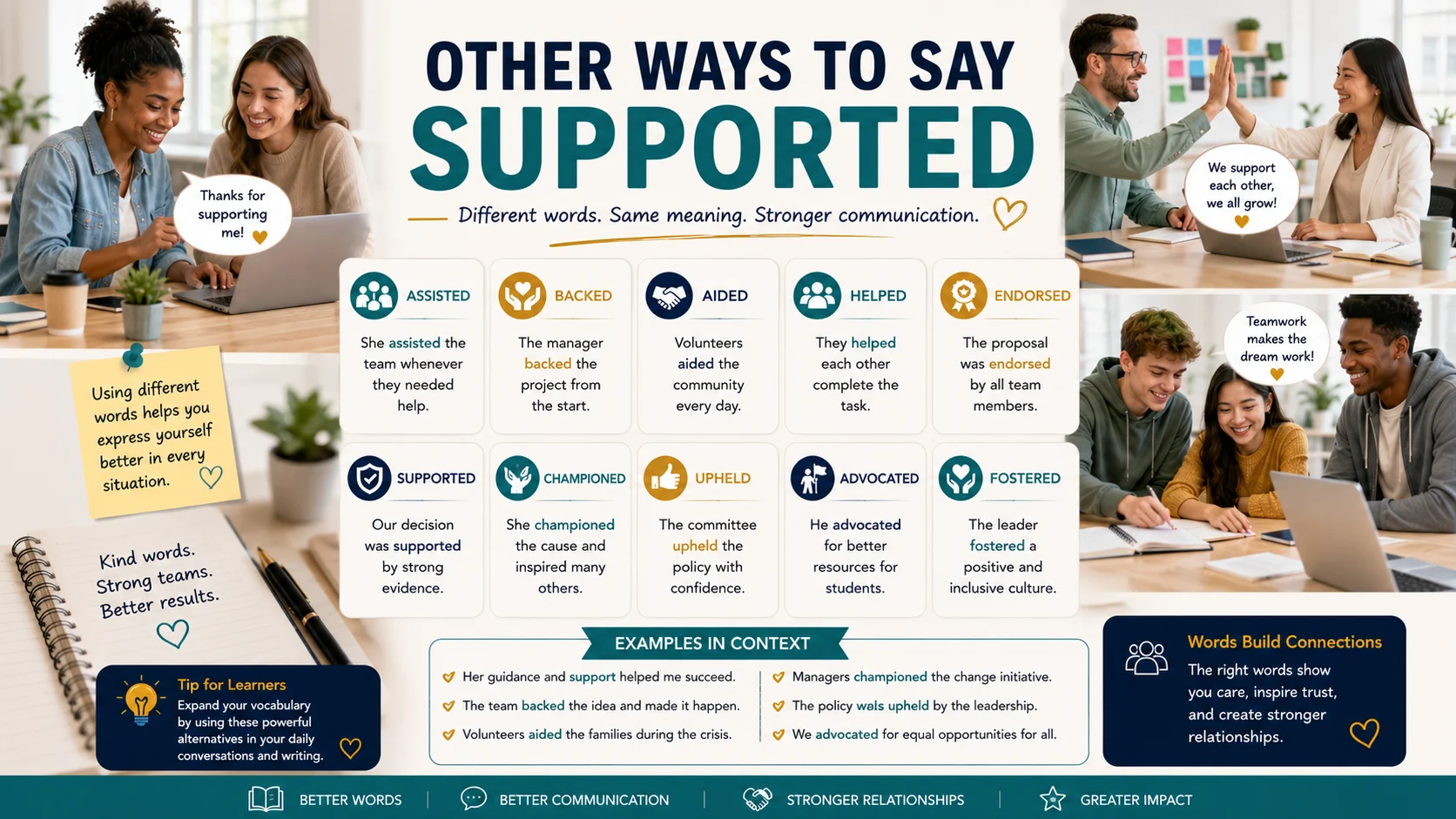
If you’re looking for other ways to say supported, some of the best alternatives include backed, encouraged, assisted, helped and endorsed. Choosing the right expression helps you sound more natural, professional and confident in different conversations and writing situations.
The phrase supported is commonly used when someone provides help, encouragement, approval, or resources to another person, idea, or project. It works in both personal and professional communication.
However, repeating the same word can make your English sound limited. Learning alternatives to supported helps expand your vocabulary and improves your fluency in speaking and writing.
You’re writing emails, giving presentations, or simply trying to express excitement in English or appreciation more naturally, knowing several other ways to say supported will make your communication stronger.
“Using the right word at the right time instantly makes your English sound more natural.”
Formal Alternatives to “Supported”
- Assisted
- Endorsed
- Sustained
- Upheld
Pro Tip: Choose formal alternatives when writing reports, academic papers, or official business communication.
Casual Alternatives
- Helped
- Backed
- Stood by
- Cheered on
Pro Tip: Casual phrases work best in everyday conversations with friends and family.
Professional Alternatives
- Facilitated
- Reinforced
- Promoted
- Advocated for
Pro Tip: Professional reaction phrases improve workplace communication and business writing.
Informal Expressions
- Had someone’s back
- Rooted for
- Was there for
- Lifted up
Pro Tip: Informal expressions in English create warmer and friendlier conversations.
“The right tone makes your English sound professional and confident.”
Common Mistakes When Using “Supported”
1. Using it for every situation
Example:
I supported the meeting.
Better:
I attended the meeting.
2. Confusing support with agree
Example:
I supported his opinion.
Better:
I agreed with his opinion.
3. Using it without context
Example:
She supported.
Better:
She supported her teammates throughout the competition.
4. Choosing it in overly formal writing
Example:
We supported the proposal.
Better:
We endorsed the proposal.
5. Repeating it too often
Example:
Our company supported the event. We supported local schools. We supported charities.
Better:
Our company backed the event, sponsored local schools, and assisted charities.
What Does “Supported” Mean?
Supported means giving help, encouragement, approval, protection, or resources to someone or something.
It is the past tense and past participle of support.
Example:
The entire team supported the new employee during training.
When to Use “Supported”
- Helping someone emotionally
- Providing financial assistance
- Backing an idea
- Encouraging a friend
- Supporting a business decision
- Academic writing
- Workplace communication
- Team collaboration
Spoken vs Written
- Spoken: Very common
- Written: Common in emails, reports, and articles
Formal vs Informal
- Formal: Yes, depending on context
- Informal: Yes
“Vocabulary variety is one of the easiest ways to improve your English.”
Is It Professional or Polite to Say “Supported”?
The word supported is definitely polite.
Polite? ✔️ Yes
Professional? ❌ Not always. In many business situations, words like endorsed, facilitated, or advocated for often sound more precise.
Business Example:
Our department endorsed the proposal after reviewing the findings.
Pros and Cons of Using “Supported”
Pros
- Simple and natural
- Friendly tone
- Common usage
- Easy to understand
Cons
- Too informal for some workplace situations
- Overused
- Limited emotional range
- Not suitable for highly formal writing
“Strong vocabulary creates stronger communication.”
Other Ways to Say “Supported” With Examples
These other ways to say supported help you sound more fluent, confident, and natural.
Choose each alternative based on your audience, tone, and situation.
1. Phrase | Backed
- Meaning: Gave approval or encouragement.
- Explanation: Common in business and daily conversations.
- Example Sentence: The manager backed my proposal.
- Best Use: Business meetings
- Worst Use: Academic definitions
- Tone: Professional, confident, supportive
- Context Variability: Casual, Professional, Spoken
2. Phrase | Helped
- Meaning: Gave assistance.
- Explanation: The most common alternative.
- Example Sentence: She helped me finish the project.
- Best Use: Everyday English
- Worst Use: Legal writing
- Tone: Friendly, simple, natural
- Context Variability: Casual, Spoken, Professional
3. Phrase | Assisted
- Meaning: Provided aid.
- Explanation: More formal than helped.
- Example Sentence: The nurse assisted the patient.
- Best Use: Workplace
- Worst Use: Casual texting
- Tone: Formal, professional, respectful
- Context Variability: Professional, Written, Spoken
4. Phrase | Encouraged
- Meaning: Inspired confidence.
- Explanation: Used for motivation.
- Example Sentence: My parents encouraged me to apply.
- Best Use: Motivation
- Worst Use: Financial reports
- Tone: Positive, warm, supportive
- Context Variability: Casual, Spoken, Professional
5. Phrase | Endorsed
- Meaning: Officially approved.
- Explanation: Often used in business.
- Example Sentence: The committee endorsed the proposal.
- Best Use: Formal approval
- Worst Use: Friendly chats
- Tone: Formal, official, professional
- Context Variability: Professional, Written
6. Phrase | Promoted
- Meaning: Helped increase awareness.
- Explanation: Often used for ideas or products.
- Example Sentence: She promoted the campaign.
- Best Use: Marketing
- Worst Use: Emotional support
- Tone: Professional, active
- Context Variability: Professional
7. Phrase | Reinforced
- Meaning: Made stronger.
- Explanation: Adds strength to ideas.
- Example Sentence: His comments reinforced my confidence.
- Best Use: Reports
- Worst Use: Casual jokes
- Tone: Formal, strong
- Context Variability: Professional
8. Phrase | Advocated for
- Meaning: Publicly supported.
- Explanation: Often used for causes.
- Example Sentence: They advocated for equal opportunities.
- Best Use: Social issues
- Worst Use: Informal chats
- Tone: Professional, persuasive
- Context Variability: Professional
9. Phrase | Stood By
- Meaning: Remained loyal.
- Explanation: Shows emotional support.
- Example Sentence: She stood by me during difficult times.
- Best Use: Personal relationships
- Worst Use: Business reports
- Tone: Warm, loyal
- Context Variability: Casual
10. Phrase | Cheered On
- Meaning: Gave encouragement.
- Explanation: Common in sports.
- Example Sentence: Everyone cheered on the team.
- Best Use: Sports
- Worst Use: Formal documents
- Tone: Positive, energetic
- Context Variability: Casual
11. Phrase | Facilitated
- Meaning: Made easier.
- Explanation: Common in workplaces.
- Example Sentence: Technology facilitated communication.
- Best Use: Business
- Worst Use: Friend conversations
- Tone: Formal, professional
- Context Variability: Professional
12. Phrase | Upheld
- Meaning: Maintained or defended.
- Explanation: Used for values or laws.
- Example Sentence: The court upheld the decision.
- Best Use: Legal writing
- Worst Use: Casual speech
- Tone: Formal
- Context Variability: Professional
13. Phrase | Sustained
- Meaning: Continued support.
- Explanation: Long term assistance.
- Example Sentence: Donations sustained the program.
- Best Use: Organizations
- Worst Use: Informal chats
- Tone: Formal
- Context Variability: Professional
14. Phrase | Sponsored
- Meaning: Financially supported.
- Explanation: Often used for events.
- Example Sentence: The company sponsored the conference.
- Best Use: Business
- Worst Use: Emotional support
- Tone: Professional
- Context Variability: Professional
15. Phrase | Strengthened
- Meaning: Made stronger.
- Explanation: Used for relationships and ideas.
- Example Sentence: Her advice strengthened my confidence.
- Best Use: Writing
- Worst Use: Casual jokes
- Tone: Positive
- Context Variability: Professional
16. Phrase | Defended
- Meaning: Protected someone or something.
- Explanation: Used in arguments.
- Example Sentence: He defended his colleague.
- Best Use: Debates
- Worst Use: Marketing
- Tone: Strong
- Context Variability: Professional
17. Phrase | Boosted
- Meaning: Increased.
- Explanation: Shows improvement.
- Example Sentence: The campaign boosted sales.
- Best Use: Business
- Worst Use: Emotional comfort
- Tone: Positive
- Context Variability: Professional
18. Phrase | Guided
- Meaning: Led someone.
- Explanation: Through advice or instruction.
- Example Sentence: She guided me through the process.
- Best Use: Teaching
- Worst Use: Financial support
- Tone: Helpful
- Context Variability: All
19. Phrase | Empowered
- Meaning: Gave confidence.
- Explanation: Inspired independence.
- Example Sentence: The workshop empowered participants.
- Best Use: Leadership
- Worst Use: Casual slang
- Tone: Inspirational
- Context Variability: Professional
20. Phrase | Encouraged Along
- Meaning: Motivated progress.
- Explanation: Positive reinforcement.
- Example Sentence: Teachers encouraged students along the journey.
- Best Use: Education
- Worst Use: Contracts
- Tone: Friendly
- Context Variability: Casual
21. Phrase | Had Someone’s Back
- Meaning: Protected someone.
- Explanation: Informal support.
- Example Sentence: I’ve always had your back.
- Best Use: Friends
- Worst Use: Formal email
- Tone: Informal, caring
- Context Variability: Casual
22. Phrase | Rooted For
- Meaning: Wanted success.
- Explanation: Often in sports.
- Example Sentence: We rooted for our classmates.
- Best Use: Teams
- Worst Use: Business proposals
- Tone: Friendly
- Context Variability: Casual
23. Phrase | Was There For
- Meaning: Offered emotional support.
- Explanation: Common in relationships.
- Example Sentence: She was there for me.
- Best Use: Personal conversations
- Worst Use: Reports
- Tone: Warm
- Context Variability: Casual
24. Phrase | Lifted Up
- Meaning: Inspired emotionally.
- Explanation: Emotional encouragement.
- Example Sentence: Their words lifted me up.
- Best Use: Motivation
- Worst Use: Legal writing
- Tone: Caring
- Context Variability: Casual
25. Phrase | Championed
- Meaning: Strongly supported.
- Explanation: Advocated passionately.
- Example Sentence: She championed workplace equality.
- Best Use: Leadership
- Worst Use: Casual texting
- Tone: Professional
- Context Variability: Professional
26. Phrase | Favored
- Meaning: Preferred or supported.
- Explanation: Indicates approval.
- Example Sentence: Most members favored the proposal.
- Best Use: Voting
- Worst Use: Emotional support
- Tone: Neutral
- Context Variability: Professional
27. Phrase | Approved
- Meaning: Accepted officially.
- Explanation: Formal acceptance.
- Example Sentence: The board approved the budget.
- Best Use: Business
- Worst Use: Friend chats
- Tone: Formal
- Context Variability: Professional
28. Phrase | Contributed To
- Meaning: Helped achieve something.
- Explanation: Indicates participation.
- Example Sentence: Everyone contributed to the success.
- Best Use: Teamwork
- Worst Use: Emotional conversations
- Tone: Neutral
- Context Variability: Professional
29. Phrase | Fostered
- Meaning: Encouraged growth.
- Explanation: Often used in education.
- Example Sentence: The program fostered creativity.
- Best Use: Education
- Worst Use: Informal texting
- Tone: Formal
- Context Variability: Professional
30. Phrase | Nurtured
- Meaning: Supported growth carefully.
- Explanation: Emotional or professional development.
- Example Sentence: Good mentors nurtured my skills.
- Best Use: Personal development
- Worst Use: Technical manuals
- Tone: Warm, encouraging
- Context Variability: Casual, Professional
“Expanding your vocabulary helps you communicate with clarity and confidence.”
Mini Quiz
1. Which alternative is most suitable for a business proposal?
A. Had someone’s back
B. Endorsed
C. Rooted for
Answer: B
2. Which phrase is best for emotional support?
A. Was there for
B. Sponsored
C. Approved
Answer: A
3. Which expression sounds the most formal?
A. Helped
B. Assisted
C. Cheered on
Answer: B
4. Which phrase works best in sports?
A. Rooted for
B. Facilitated
C. Upheld
Answer: A
Comparison Table: Top Alternatives
| Phrase | Tone | Best Use |
|---|---|---|
| Backed | Professional | Meetings |
| Assisted | Formal | Workplace |
| Helped | Friendly | Daily conversation |
| Encouraged | Warm | Motivation |
| Endorsed | Official | Business |
| Facilitated | Professional | Projects |
| Reinforced | Formal | Reports |
| Championed | Strong | Leadership |
| Sponsored | Professional | Events |
| Advocated for | Persuasive | Causes |
FAQs
What are the best other ways to say supported?
Backed, assisted, endorsed, encouraged, facilitated, and championed are among the best alternatives depending on you need formal, casual, or professional wording.
Which alternative is best for business communication?
Words such as endorsed, facilitated, advocated for, approved, and reinforced sound more professional than simply saying supported.
Can I use supported in formal writing?
Yes, but in many formal documents, choosing more specific alternatives to supported makes your writing clearer and more precise.
How can learning alternatives to supported improve my English?
Using different expressions helps you avoid repetition, improve fluency, and choose the right tone for conversations, emails, presentations, and reports.
What is the difference between helped and supported?
Helped usually refers to direct assistance, while supported can also mean giving encouragement, approval, resources, or emotional backing.
Conclusion
Learning other ways to say supported gives you greater flexibility in both spoken and written English. Instead of repeating the same word, you can choose expressions that better match your audience, purpose, and level of formality.
Practice these alternatives daily, pay attention to tone, and use the right phrase for each situation. Over time, your English will sound more natural, confident, and professional.
Discover More Related Articles:
- Other Ways to Say No Pressure | Friendly Phrases That Work In 2026
- Other Ways to Say Boobs | Polite Lines for Any Situation In 2026
- Other Ways to Say Yes | Talk Like a Natural Speaker In 2026