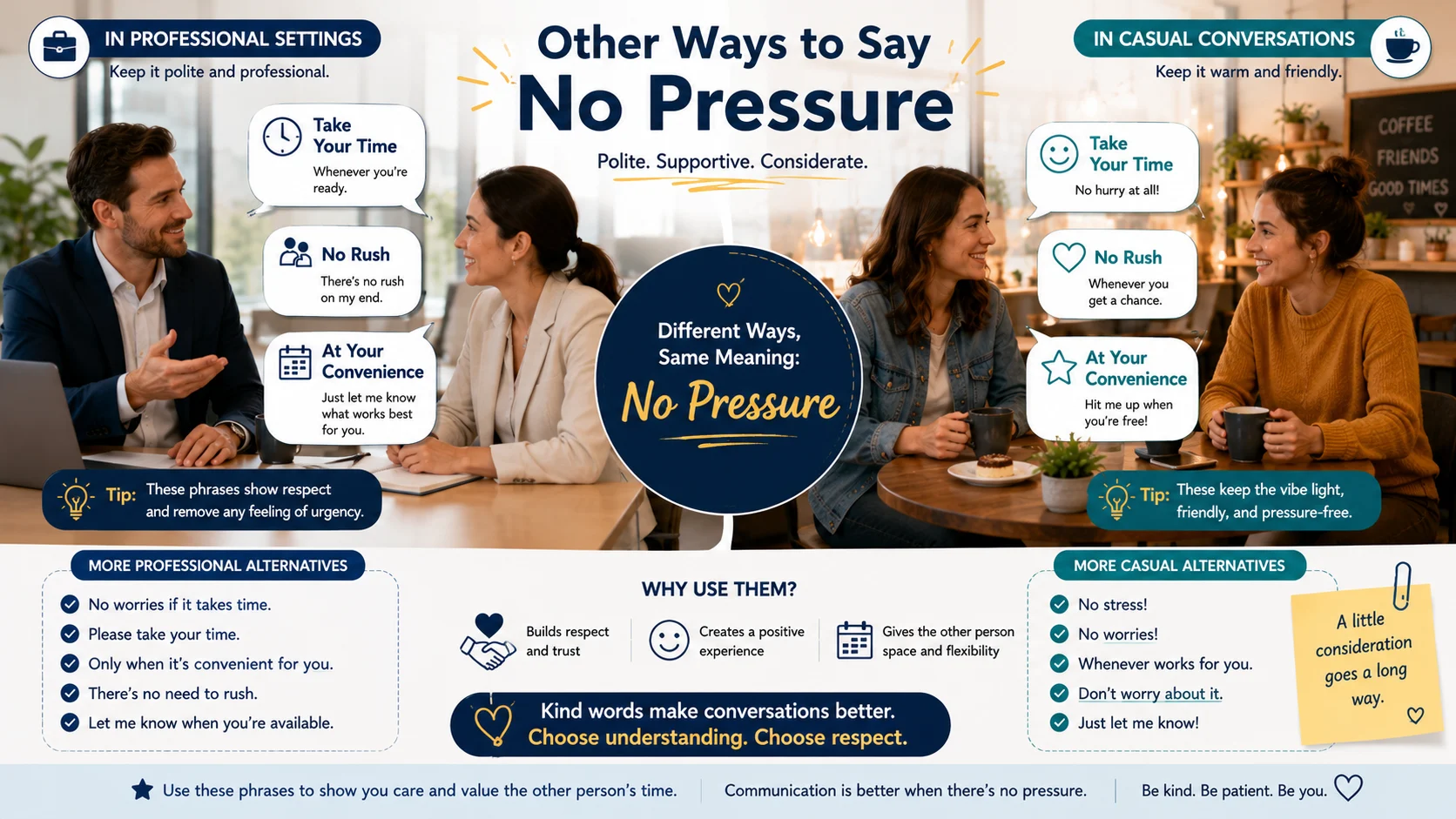
If you want alternatives to “no pressure,” try phrases like take your time, only if you want to, no rush, feel free to decide later, and there’s absolutely no obligation. These expressions help you sound more natural, polite and professional in both casual and workplace conversations.
The phrase “no pressure” is commonly used to make someone feel comfortable or relaxed about a decision, task, or response. It reduces tension and signals that there is no urgent expectation.
People often use this expression in conversations with friends, coworkers, clients, or students. However, using the same phrase repeatedly can sound repetitive or too casual in professional situations.
Learning other ways to say no pressure improves your fluency and helps you choose the right tone for different contexts. It also helps you sound more natural when using alternatives to “no pressure” in spoken and written English.
“Small wording changes can make your English sound more thoughtful and professional.”
Formal Alternatives to “No Pressure”
- There is no obligation
- Please take your time
- Feel free to consider it carefully
- There is no immediate urgency
Pro Tip
Formal alternatives work best in emails, meetings, and client communication where professionalism matters.
Casual Alternatives
- No rush
- Take your time
- Whenever you’re ready
- It’s totally up to you
Pro Tip
Casual expressions sound friendly and relaxed in everyday conversations with friends or family.
Professional Alternatives
- Please respond at your convenience
- There is no strict deadline
- You may decide later
- Only if it works for you
Pro Tip
Professional reaction phrases should sound respectful, calm, and flexible without seeming demanding.
Informal Expressions
- Don’t sweat it
- No big deal
- Chill, no rush
- No worries either way
Pro Tip
Use informal expressions in English carefully. Some phrases may sound too casual in workplace communication.
“The right tone makes your English sound confident, polite, and natural.”
Common Mistakes When Using “No Pressure”
1. Using it in very formal business writing
Example: “No pressure to sign the contract today.”
This may sound too casual for legal or executive communication.
2. Saying it too often
Example: “No pressure, but no pressure if you can’t.”
Repeating the phrase weakens your message.
3. Using it while actually pressuring someone
Example: “No pressure, but everyone already agreed.”
This creates mixed signals.
4. Using it sarcastically
Example: “No pressure… your whole career depends on it.”
Sarcasm may confuse English learners.
5. Using informal expressions with clients
Example: “Chill, no rush on the payment.”
This sounds unprofessional.
What Does “No Pressure” Mean?
“No pressure” means someone should not feel stressed, rushed, or forced to do something.
It is usually used before or after a request to sound more polite and relaxed.
Example sentence:
“Send me the report tomorrow, but no pressure.”
When to Use “No Pressure”
Use this phrase in situations like:
- Asking someone for help
- Giving flexible deadlines
- Offering invitations
- Encouraging relaxed decisions
- Friendly conversations
Spoken vs Written
- Very common in spoken English
- Acceptable in casual writing and messages
- Less suitable for formal documents
Formal vs Informal
- Mostly informal
- Semi professional in friendly workplaces
- Not ideal for highly formal communication
“Fluent English is not only about vocabulary. It is also about choosing the right tone.”
Is It Professional or Polite to Say “No Pressure”?
“No pressure” is generally polite because it reduces stress and sounds considerate.
However, it is not always highly professional in formal workplace settings.
Business example:
“Please review the proposal when you have time. There is no immediate urgency.”
Polite? ✔️ Yes
Professional? ❌ No (in most cases)
Pros and Cons of Using “No Pressure”
Pros
- Simple and natural
- Friendly tone
- Common usage
- Easy to understand
Cons
- Too informal for work
- Overused
- Limited emotional range
- Not suitable for formal writing
Other Ways to Say “No Pressure” With Examples
These alternatives will help you sound more fluent, confident, and natural in different situations.
Use them according to tone, context, and audience to express excitement in English, flexibility, or reassurance.
1. Phrase | Take Your Time
- Meaning: There is no need to hurry.
- Explanation: This is one of the most natural alternatives to “no pressure.”
- Example Sentence: “Take your time deciding which option works best.”
- Best Use: Friendly advice
- Worst Use: Emergency situations
- Tone: Calm, supportive, polite
- Context Variability: casual / professional / spoken
2. Phrase | No Rush
- Meaning: The task does not need immediate attention.
- Explanation: A common casual expression in everyday English.
- Example Sentence: “No rush on the reply.”
- Best Use: Text messages
- Worst Use: Formal reports
- Tone: Relaxed, casual, friendly
- Context Variability: casual / spoken examples
3. Phrase | Whenever You’re Ready
- Meaning: The timing is completely flexible.
- Explanation: Often used to make others feel comfortable.
- Example Sentence: “Whenever you’re ready, we can begin.”
- Best Use: Conversations
- Worst Use: Strict deadlines
- Tone: Patient, warm, encouraging
- Context Variability: casual / spoken examples
4. Phrase | Only If You Want To
- Meaning: Participation is optional.
- Explanation: This phrase removes social pressure politely.
- Example Sentence: “Join us for dinner only if you want to.”
- Best Use: Invitations
- Worst Use: Instructions
- Tone: Gentle, respectful, kind
- Context Variability: casual / spoken examples
5. Phrase | Feel Free to Decide Later
- Meaning: A delayed decision is acceptable.
- Explanation: Useful in professional and personal settings.
- Example Sentence: “Feel free to decide later if you need more time.”
- Best Use: Professional communication
- Worst Use: Urgent meetings
- Tone: Professional, flexible, considerate
- Context Variability: professional / written examples
“Professional English often sounds softer, not stricter.”
6. Phrase | There’s No Obligation
- Meaning: Nobody is forced to agree.
- Explanation: A very professional alternative.
- Example Sentence: “There’s no obligation to attend the event.”
- Best Use: Business communication
- Worst Use: Casual jokes
- Tone: Formal, respectful, neutral
- Context Variability: professional / written examples
7. Phrase | Don’t Feel Obligated
- Meaning: The person should not feel responsible.
- Explanation: This phrase reduces emotional pressure.
- Example Sentence: “Don’t feel obligated to stay late.”
- Best Use: Workplace support
- Worst Use: Strict authority
- Tone: Supportive, polite, caring
- Context Variability: casual / professional
8. Phrase | At Your Convenience
- Meaning: Respond whenever suitable.
- Explanation: A common professional reaction phrase.
- Example Sentence: “Please review the file at your convenience.”
- Best Use: Emails
- Worst Use: Friendly chats
- Tone: Formal, polished, professional
- Context Variability: professional / written examples
9. Phrase | There’s No Immediate Urgency
- Meaning: Immediate action is unnecessary.
- Explanation: Excellent for formal communication.
- Example Sentence: “There’s no immediate urgency regarding the update.”
- Best Use: Corporate settings
- Worst Use: Informal texting
- Tone: Formal, calm, professional
- Context Variability: professional examples
10. Phrase | It’s Totally Up to You
- Meaning: The decision belongs entirely to the other person.
- Explanation: A relaxed and friendly phrase.
- Example Sentence: “It’s totally up to you whether you join us.”
- Best Use: Casual discussions
- Worst Use: Executive emails
- Tone: Friendly, informal, relaxed
- Context Variability: casual / spoken examples
11. Phrase | No Worries Either Way
- Meaning: Any choice is acceptable.
- Explanation: Helps create a relaxed atmosphere.
- Example Sentence: “No worries either way if you can’t make it.”
- Best Use: Social plans
- Worst Use: Formal negotiations
- Tone: Casual, reassuring, warm
- Context Variability: casual / spoken examples
12. Phrase | If It Works for You
- Meaning: The decision depends on the listener’s comfort.
- Explanation: Common in professional scheduling.
- Example Sentence: “We can meet Friday if it works for you.”
- Best Use: Meetings
- Worst Use: Emergencies
- Tone: Flexible, respectful, professional
- Context Variability: professional / spoken examples
13. Phrase | Whenever You Have Time
- Meaning: Complete it when available.
- Explanation: Softens requests politely.
- Example Sentence: “Send the details whenever you have time.”
- Best Use: Workplace requests
- Worst Use: Time sensitive tasks
- Tone: Polite, relaxed, considerate
- Context Variability: professional / casual
14. Phrase | There’s No Hurry
- Meaning: Speed is unnecessary.
- Explanation: Similar to “no rush.”
- Example Sentence: “There’s no hurry to finish today.”
- Best Use: Friendly reminders
- Worst Use: Deadlines
- Tone: Calm, casual, supportive
- Context Variability: casual / spoken examples
15. Phrase| You Can Think About It
- Meaning: More consideration time is allowed.
- Explanation: Useful for decisions and invitations.
- Example Sentence: “You can think about it before answering.”
- Best Use: Advice
- Worst Use: Final approvals
- Tone: Thoughtful, patient, polite
- Context Variability: casual / professional
16. Phrase | No Need to Decide Right Away
- Meaning: Immediate commitment is unnecessary.
- Explanation: Removes urgency politely.
- Example Sentence: “No need to decide right away about the offer.”
- Best Use: Negotiations
- Worst Use: Quick polls
- Tone: Reassuring, respectful, calm
- Context Variability: professional / casual
17. Phrase | If You’re Comfortable
- Meaning: The action depends on personal comfort.
- Explanation: Encourages consent and flexibility.
- Example Sentence: “Share your thoughts if you’re comfortable.”
- Best Use: Sensitive topics
- Worst Use: Commands
- Tone: Gentle, respectful, caring
- Context Variability: casual / professional
18. Phrase | Completely Optional
- Meaning: Participation is not required.
- Explanation: Very direct and clear.
- Example Sentence: “The workshop is completely optional.”
- Best Use: Announcements
- Worst Use: Emotional support
- Tone: Neutral, clear, professional
- Context Variability: professional / written examples
19. Phrase | Do It Whenever Suits You
- Meaning: Timing depends on personal convenience.
- Explanation: A natural British English expression.
- Example Sentence: “Call me whenever suits you.”
- Best Use: Friendly scheduling
- Worst Use: Formal presentations
- Tone: Relaxed, polite, conversational
- Context Variability: casual / spoken examples
20. Phrase | No Big Deal
- Meaning: The situation is unimportant or flexible.
- Explanation: A very informal expression.
- Example Sentence: “If you can’t come, it’s no big deal.”
- Best Use: Friends
- Worst Use: Professional emails
- Tone: Informal, relaxed, easygoing
- Context Variability: casual / spoken examples
“Using different expressions helps you avoid repetitive English.”
21. Phrase | Don’t Stress About It
- Meaning: There is no reason to worry.
- Explanation: Comforting and casual.
- Example Sentence: “Don’t stress about the deadline.”
- Best Use: Emotional support
- Worst Use: Formal reports
- Tone: Friendly, supportive, casual
- Context Variability: casual / spoken examples
22. Phrase | There’s Plenty of Time
- Meaning: Enough time remains available.
- Explanation: Reassures someone calmly.
- Example Sentence: “There’s plenty of time to prepare.”
- Best Use: Reassurance
- Worst Use: Urgent tasks
- Tone: Calm, positive, supportive
- Context Variability: casual / professional
23. Phrase | You Don’t Have To
- Meaning: The action is optional.
- Explanation: A simple and direct alternative.
- Example Sentence: “You don’t have to reply immediately.”
- Best Use: Everyday English
- Worst Use: Formal contracts
- Tone: Direct, casual, friendly
- Context Variability: casual / spoken examples
24. Phrase | It Can Wait
- Meaning: Immediate action is unnecessary.
- Explanation: Useful in relaxed conversations.
- Example Sentence: “The paperwork can wait until tomorrow.”
- Best Use: Workplace chats
- Worst Use: Emergencies
- Tone: Calm, relaxed, practical
- Context Variability: casual / professional
25. Phrase | If You Have the Time
- Meaning: Only do it when available.
- Explanation: A polite request softener.
- Example Sentence: “Review the draft if you have the time.”
- Best Use: Requests
- Worst Use: Urgent orders
- Tone: Respectful, flexible, polite
- Context Variability: professional / written examples
26. Phrase | No Expectations
- Meaning: Nothing is required.
- Explanation: Removes emotional pressure clearly.
- Example Sentence: “Join us with no expectations.”
- Best Use: Invitations
- Worst Use: Corporate policies
- Tone: Relaxed, neutral, reassuring
- Context Variability: casual / spoken examples
27. Phrase | Feel Free to Pass
- Meaning: Declining is acceptable.
- Explanation: Common in group discussions.
- Example Sentence: “Feel free to pass if you prefer not to answer.”
- Best Use: Group activities
- Worst Use: Official documents
- Tone: Respectful, relaxed, considerate
- Context Variability: casual / professional
28. Phrase | You Can Always Decide Later
- Meaning: Delayed decisions are welcome.
- Explanation: Encourages thoughtful consideration.
- Example Sentence: “You can always decide later about joining.”
- Best Use: Invitations
- Worst Use: Final deadlines
- Tone: Patient, supportive, flexible
- Context Variability: casual / professional
29. Phrase | No Need to Rush
- Meaning: Hurrying is unnecessary.
- Explanation: A close alternative to “no pressure.”
- Example Sentence: “No need to rush through the project.”
- Best Use: Encouragement
- Worst Use: Time critical tasks
- Tone: Calm, friendly, reassuring
- Context Variability: casual / professional
30. Phrase | Totally Your Choice
- Meaning: The decision is entirely personal.
- Explanation: Sounds casual and supportive.
- Example Sentence: “It’s totally your choice whether to participate.”
- Best Use: Informal conversations
- Worst Use: Formal proposals
- Tone: Casual, friendly, relaxed
- Context Variability: casual / spoken examples
“Choosing the right alternative helps you sound fluent in every situation.”
Mini Quiz / Self Check
1. Which phrase sounds most professional in an email?
A. Chill, no rush
B. At your convenience
C. No big deal
Correct Answer: B
2. Which phrase is best for a casual invitation?
A. There is no obligation
B. No immediate urgency
C. It’s totally up to you
Correct Answer: C
3. Which expression is too informal for most business communication?
A. No worries either way
B. Please take your time
C. At your convenience
Correct Answer: A
4. Which phrase best removes emotional pressure?
A. Don’t feel obligated
B. Hurry up
C. Final decision only
Correct Answer: A
Comparison Table | Top Alternatives
| Phrase | Tone | Best Use |
|---|---|---|
| Take your time | Calm | Friendly advice |
| No rush | Casual | Text messages |
| At your convenience | Professional | Emails |
| There’s no obligation | Formal | Business communication |
| Whenever you’re ready | Warm | Conversations |
| If it works for you | Flexible | Scheduling |
| Don’t feel obligated | Caring | Workplace support |
| Completely optional | Neutral | Announcements |
| Feel free to decide later | Professional | Decision making |
| No need to rush | Supportive | Encouragement |
FAQs
What are the best alternatives to “no pressure”?
Some of the best alternatives to “no pressure” include “take your time,” “no rush,” “at your convenience,” and “there’s no obligation.”
Is “no pressure” professional in emails?
It can sound polite, but it is usually too informal for highly professional emails. More formal alternatives are often better.
What is a formal way to say “no pressure”?
Formal alternatives include “there is no immediate urgency,” “at your convenience,” and “please take your time.”
Can I use “no pressure” in spoken English?
Yes. It is very common in casual spoken English and friendly workplace conversations.
Why should I learn other ways to say “no pressure”?
Learning other ways to say “no pressure” improves fluency, helps avoid repetition, and allows you to match the correct tone in different situations.
Conclusion
Learning alternatives to “no pressure” helps you sound more natural, polite, and fluent in English conversations. Different phrases work better in casual, professional, and formal situations.
Practice using these expressions daily to improve confidence and communication skills. Tone awareness is an important part of speaking English naturally and professionally.