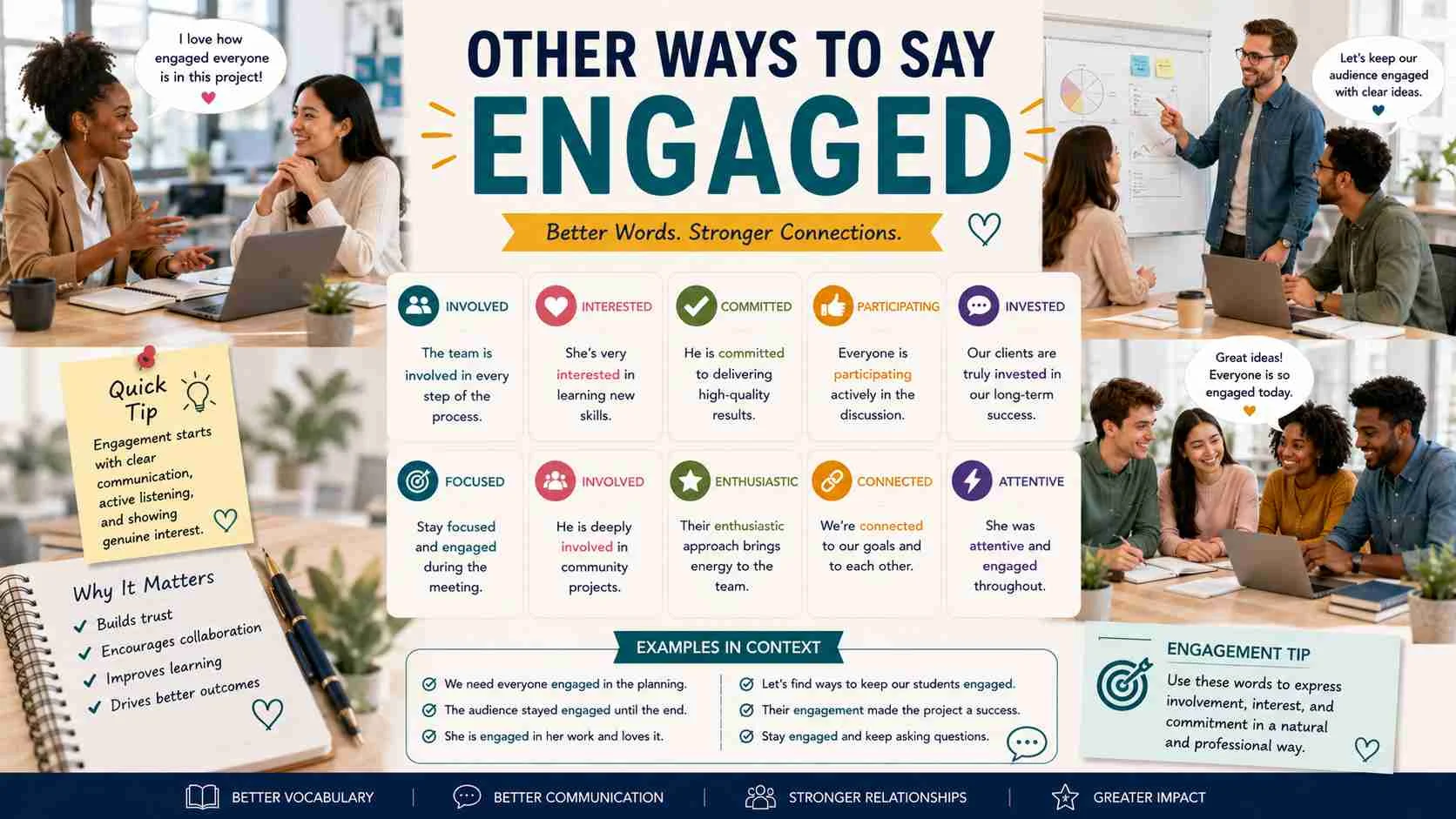
If you’re looking for other ways to say engaged, try expressions like occupied, involved, committed, attentive and busy. These alternatives help you communicate more naturally in personal, academic and professional conversations while choosing the right tone for every situation.
The word engaged can have several meanings depending on the context. It may describe someone who is busy with a task, emotionally involved, fully attentive, committed to something, or even planning to get married.
Learning alternatives to engaged helps you sound more fluent and confident. Instead of repeating the same word, you can choose expressions that better fit formal emails, casual conversations, presentations, or everyday speech.
Expanding your vocabulary also makes it easier to express excitement in English, describe commitment accurately, and communicate with greater precision.
“Choosing the right word makes your English sound more natural and more confident.”
Formal Alternatives to “Engaged”
- Committed
- Involved
- Dedicated
- Occupied
Pro Tip: Use these expressions in reports, presentations, business emails, and academic writing for a polished tone.
Casual Alternatives
- Busy
- Into it
- Wrapped up
- Focused
Pro Tip: Casual expressions work best with friends, family, and relaxed conversations.
Professional Alternatives
- Currently occupied
- Actively involved
- Fully committed
- Focused on the project
Pro Tip: Professional wording sounds more respectful in workplace communication.
Informal Expressions
- Tied up
- In the zone
- Deep into it
- Keeping busy
Pro Tip: Informal expressions should usually be avoided in formal documents.
“The best vocabulary choice always depends on your audience and situation.”
Common Mistakes When Using “Engaged”
1. Using it when you only mean “busy”
Incorrect: She is engaged all afternoon.
Better: She is busy all afternoon.
2. Confusing it with marriage
Incorrect: He is engaged with homework.
Better: He is occupied with homework.
3. Using it in every situation
Instead of repeating engaged, choose words like focused, committed, or involved.
4. Using informal phrases in business writing
Avoid writing “I’m tied up.”
Instead write “I’m currently occupied.”
5. Forgetting the context
Always match your vocabulary to your audience and purpose.
What Does “Engaged” Mean?
The word engaged generally means being actively involved, occupied, interested, committed, or focused on something. It can also mean being promised in marriage.
Example:
She remained engaged throughout the entire meeting.
When to Use “Engaged”
- During conversations about attention
- While describing commitment
- In workplace discussions
- In classroom settings
- During presentations
- When discussing relationships
Spoken vs Written
- Spoken: Very common
- Written: Appropriate depending on context
Formal vs Informal
- Formal: Sometimes
- Informal: Very common
Is It Professional or Polite to Say “Engaged”?
The word engaged is polite and generally acceptable. However, when referring to being busy at work, more precise professional phrases often sound better.
Business Example
“I am currently occupied with another project but will respond tomorrow.”
Polite? ✔️ Yes
Professional? ❌ Not always in workplace communication.
“Professional communication becomes stronger when your vocabulary matches the situation.”
Pros and Cons of Using “Engaged”
Pros
- Simple and natural
- Friendly tone
- Common usage
- Easy to understand
Cons
- Too informal for some work situations
- Frequently overused
- Limited emotional range
- Less suitable for formal documents
Other Ways to Say “Engaged” With Examples
These alternatives help you sound more fluent, confident, and natural.
Choose the one that best fits your audience, tone, and purpose.
1. Phrase | Committed
- Meaning: Fully dedicated.
- Explanation: Shows strong responsibility.
- Example Sentence: She is committed to the project.
- Best Use: Professional writing
- Worst Use: Casual jokes
- Tone: Professional, confident
- Context Variability: Casual, professional, spoken
2. Phrase | Occupied
- Meaning: Busy doing something.
- Explanation: Indicates unavailable time.
- Example Sentence: I’m occupied this afternoon.
- Best Use: Work emails
- Worst Use: Romantic context
- Tone: Neutral, polite
- Context Variability: Casual, professional, spoken
3. Phrase | Busy
- Meaning: Having many tasks.
- Explanation: Everyday replacement.
- Example Sentence: She’s busy today.
- Best Use: Daily conversation
- Worst Use: Formal reports
- Tone: Casual, friendly
- Context Variability: Casual, spoken
4. Phrase | Involved
- Meaning: Taking part actively.
- Explanation: Highlights participation.
- Example Sentence: He is involved in community work.
- Best Use: Formal discussion
- Worst Use: Marriage meaning
- Tone: Professional, positive
- Context Variability: Casual, professional
5. Phrase | Focused
- Meaning: Paying full attention.
- Explanation: Shows concentration.
- Example Sentence: Everyone stayed focused.
- Best Use: Meetings
- Worst Use: Wedding context
- Tone: Positive, confident
- Context Variability: Spoken, professional
6. Phrase | Dedicated
- Meaning: Strongly devoted.
- Explanation: Emphasizes commitment.
- Example Sentence: She’s dedicated to teaching.
- Best Use: Professional praise
- Worst Use: Casual jokes
- Tone: Respectful, formal
- Context Variability: Professional, spoken
7. Phrase | Invested
- Meaning: Emotionally involved.
- Explanation: Shows deep interest.
- Example Sentence: He’s invested in the outcome.
- Best Use: Discussions
- Worst Use: Marriage context
- Tone: Positive, thoughtful
- Context Variability: Casual, professional
8. Phrase | Absorbed
- Meaning: Completely focused.
- Explanation: Indicates deep concentration.
- Example Sentence: She was absorbed in reading.
- Best Use: Descriptions
- Worst Use: Emails
- Tone: Neutral, descriptive
- Context Variability: Spoken, written
9. Phrase | Immersed
- Meaning: Deeply involved.
- Explanation: Shows complete attention.
- Example Sentence: They’re immersed in research.
- Best Use: Academic writing
- Worst Use: Casual texting
- Tone: Formal, academic
- Context Variability: Professional
10. Phrase | Preoccupied
- Meaning: Mentally occupied.
- Explanation: Focused on something else.
- Example Sentence: He looked preoccupied.
- Best Use: Writing
- Worst Use: Wedding meaning
- Tone: Neutral, descriptive
- Context Variability: Spoken, written
11. Phrase | Active
- Meaning: Taking part energetically in an activity.
- Explanation: Use active to describe someone who is involved and engaged in work, discussions, or hobbies.
- Example Sentence: She remained active throughout the workshop by asking thoughtful questions.
- Best Use: Group discussions
- Worst Use: Marriage context
- Tone: Positive, energetic
- Context Variability: Casual, professional, spoken
12. Phrase | Attentive
- Meaning: Paying close attention.
- Explanation: This word emphasizes careful listening or observing.
- Example Sentence: The students were attentive during the entire lecture.
- Best Use: Education, meetings
- Worst Use: Casual texting
- Tone: Respectful, professional
- Context Variability: Professional, spoken, academic
13. Phrase | Tied Up
- Meaning: Too busy to do something else.
- Explanation: An informal way to say you’re occupied with other responsibilities.
- Example Sentence: I’m tied up with meetings this morning.
- Best Use: Casual workplace
- Worst Use: Formal reports
- Tone: Informal, friendly
- Context Variability: Casual, spoken, professional
14. Phrase | Wrapped Up
- Meaning: Completely occupied with something.
- Explanation: It suggests being deeply involved in a task or activity.
- Example Sentence: She was wrapped up in preparing the presentation.
- Best Use: Conversations
- Worst Use: Legal writing
- Tone: Casual, descriptive
- Context Variability: Casual, spoken
15. Phrase | In the Middle of Something
- Meaning: Currently doing an activity.
- Explanation: A polite way to explain that you’re busy at the moment.
- Example Sentence: Sorry, I’m in the middle of something right now.
- Best Use: Everyday conversation
- Worst Use: Formal documents
- Tone: Polite, casual
- Context Variability: Casual, spoken
16. Phrase | Hard at Work
- Meaning: Working with great effort.
- Explanation: Highlights dedication and productivity.
- Example Sentence: The team is hard at work finishing the project.
- Best Use: Workplace communication
- Worst Use: Wedding context
- Tone: Positive, professional
- Context Variability: Professional, spoken
17. Phrase | Working on Something
- Meaning: Currently completing a task.
- Explanation: A simple and natural way to explain what you’re doing.
- Example Sentence: I’m working on a new marketing proposal.
- Best Use: Emails, conversations
- Worst Use: Formal speeches
- Tone: Neutral, natural
- Context Variability: Casual, professional
18. Phrase | Fully Occupied
- Meaning: Having no free time available.
- Explanation: A more formal alternative to “busy.”
- Example Sentence: She is fully occupied with client meetings today.
- Best Use: Business communication
- Worst Use: Friendly chat
- Tone: Formal, professional
- Context Variability: Professional, written
19. Phrase | Concentrating
- Meaning: Giving complete attention to something.
- Explanation: Use this when someone needs uninterrupted focus.
- Example Sentence: Please don’t interrupt; I’m concentrating on this report.
- Best Use: Work, study
- Worst Use: Wedding context
- Tone: Neutral, focused
- Context Variability: Spoken, professional
20. Phrase | Deep in Thought
- Meaning: Thinking very carefully.
- Explanation: Describes someone who is mentally focused or reflecting.
- Example Sentence: He sat quietly, deep in thought before answering.
- Best Use: Storytelling
- Worst Use: Quick updates
- Tone: Reflective, descriptive
- Context Variability: Spoken, written
21. Phrase | Interested
- Meaning: Showing curiosity or attention.
- Explanation: Indicates that someone wants to learn or know more.
- Example Sentence: She is interested in learning a new language.
- Best Use: Everyday communication
- Worst Use: Business availability
- Tone: Friendly, positive
- Context Variability: Casual, professional
22. Phrase | Passionate
- Meaning: Having strong enthusiasm for something.
- Explanation: Expresses deep emotional commitment or excitement.
- Example Sentence: He’s passionate about environmental conservation.
- Best Use: Interviews
- Worst Use: Availability updates
- Tone: Strong, inspiring
- Context Variability: Professional, spoken
23. Phrase | Enthusiastic
- Meaning: Showing excitement and interest.
- Explanation: Often used to describe eager participation.
- Example Sentence: The volunteers were enthusiastic about the event.
- Best Use: Workplace, education
- Worst Use: Marriage context
- Tone: Positive, energetic
- Context Variability: Casual, professional
24. Phrase | Devoted
- Meaning: Deeply committed to someone or something.
- Explanation: Shows loyalty, dedication, and consistent effort.
- Example Sentence: She is devoted to helping her community.
- Best Use: Formal writing
- Worst Use: Casual jokes
- Tone: Respectful, sincere
- Context Variability: Professional, written
25. Phrase | Participating
- Meaning: Taking part in an activity.
- Explanation: Emphasizes active involvement in an event or discussion.
- Example Sentence: Many employees are participating in the training session.
- Best Use: Meetings, events
- Worst Use: Marriage meaning
- Tone: Neutral, professional
- Context Variability: Professional, academic
26. Phrase | Taking Part
- Meaning: Being involved in an activity.
- Explanation: A common expression for joining an event or discussion.
- Example Sentence: She is taking part in the charity marathon.
- Best Use: Community events
- Worst Use: Formal reports
- Tone: Friendly, natural
- Context Variability: Casual, spoken
27. Phrase | Connected
- Meaning: Emotionally or socially involved.
- Explanation: Suggests a strong relationship or engagement with people or ideas.
- Example Sentence: The speaker quickly connected with the audience.
- Best Use: Communication
- Worst Use: Availability updates
- Tone: Warm, positive
- Context Variability: Casual, professional
28. Phrase | Hooked
- Meaning: Extremely interested in something.
- Explanation: An informal expression for strong interest or enjoyment.
- Example Sentence: I’m hooked on this new podcast series.
- Best Use: Casual conversation
- Worst Use: Business emails
- Tone: Informal, enthusiastic
- Context Variability: Casual, spoken
29. Phrase | Into It
- Meaning: Enjoying or being deeply interested in something.
- Explanation: A casual expression commonly used in everyday English.
- Example Sentence: She’s really into photography these days.
- Best Use: Friendly conversations
- Worst Use: Academic writing
- Tone: Casual, relaxed
- Context Variability: Casual, spoken
30. Phrase | In the Zone
- Context Variability: Casual, spoken
- Meaning: Completely focused and performing at your best.
- Explanation: Describes a state of deep concentration and productivity.
- Example Sentence: Don’t interrupt him; he’s in the zone.
- Best Use: Sports, work
- Worst Use: Formal reports
Tone: Informal, motivational
“Using different expressions instead of repeating the same word instantly improves your fluency.”
Mini Quiz
1. Which phrase is most suitable for a business email?
A. Hooked
B. Tied up
C. Currently occupied
D. Into it
Answer: C
2. Which phrase sounds most casual?
A. Dedicated
B. Busy
C. Immersed
D. Committed
Answer: B
3. Which expression best shows strong concentration?
A. Focused
B. Married
C. Hooked
D. Busy
Answer: A
4. Which phrase is best for academic writing?
A. Immersed
B. Into it
C. Hooked
D. Tied up
Answer: A
Comparison Table | Top Alternatives
| Phrase | Tone | Best Use |
|---|---|---|
| Committed | Professional | Business |
| Occupied | Neutral | Emails |
| Busy | Casual | Daily conversation |
| Focused | Professional | Meetings |
| Dedicated | Formal | Academic |
| Involved | Neutral | Projects |
| Immersed | Formal | Research |
| Invested | Positive | Discussions |
| Absorbed | Neutral | Writing |
| Attentive | Professional | Presentations |
FAQs
What are the best other ways to say engaged?
Some of the best alternatives include committed, occupied, involved, focused, attentive, and busy. The right choice depends on you’re speaking casually or writing professionally.
Is “engaged” a formal word?
Yes, but only in certain contexts. When talking about work or availability, more specific professional reaction phrases such as currently occupied or fully committed often sound better.
How can I express excitement in English instead of saying engaged?
If you want to express excitement in English, use words like enthusiastic, passionate, invested, or excited instead of simply saying engaged.
Which alternatives to engaged are best for professional communication?
For workplace conversations, choose committed, involved, dedicated, occupied, or focused because they sound more professional and precise.
Why should English learners learn other ways to say engaged?
Learning other ways to say engaged improves vocabulary, avoids repetition, increases fluency, and helps you communicate naturally in both formal and informal expressions in English.
Conclusion
Learning other ways to say engaged helps you communicate with greater confidence and accuracy. You’re writing professional emails, speaking with friends, or participating in meetings, choosing the right alternative creates a stronger impression.
Practice these expressions regularly, pay attention to tone, and match your vocabulary to the situation. Over time, you’ll sound more fluent, natural, and professional in every conversation.
Discover More Related Articles:
- Other Ways to Say God Bless | Heartfelt Words for Every Occasion In 2026
- Other Ways to Say I Can’t Wait | Exciting Alternatives You’ll Love In 2026
- Other Ways to Say Supported | Fresh Alternatives You’ll Actually Use In 2026