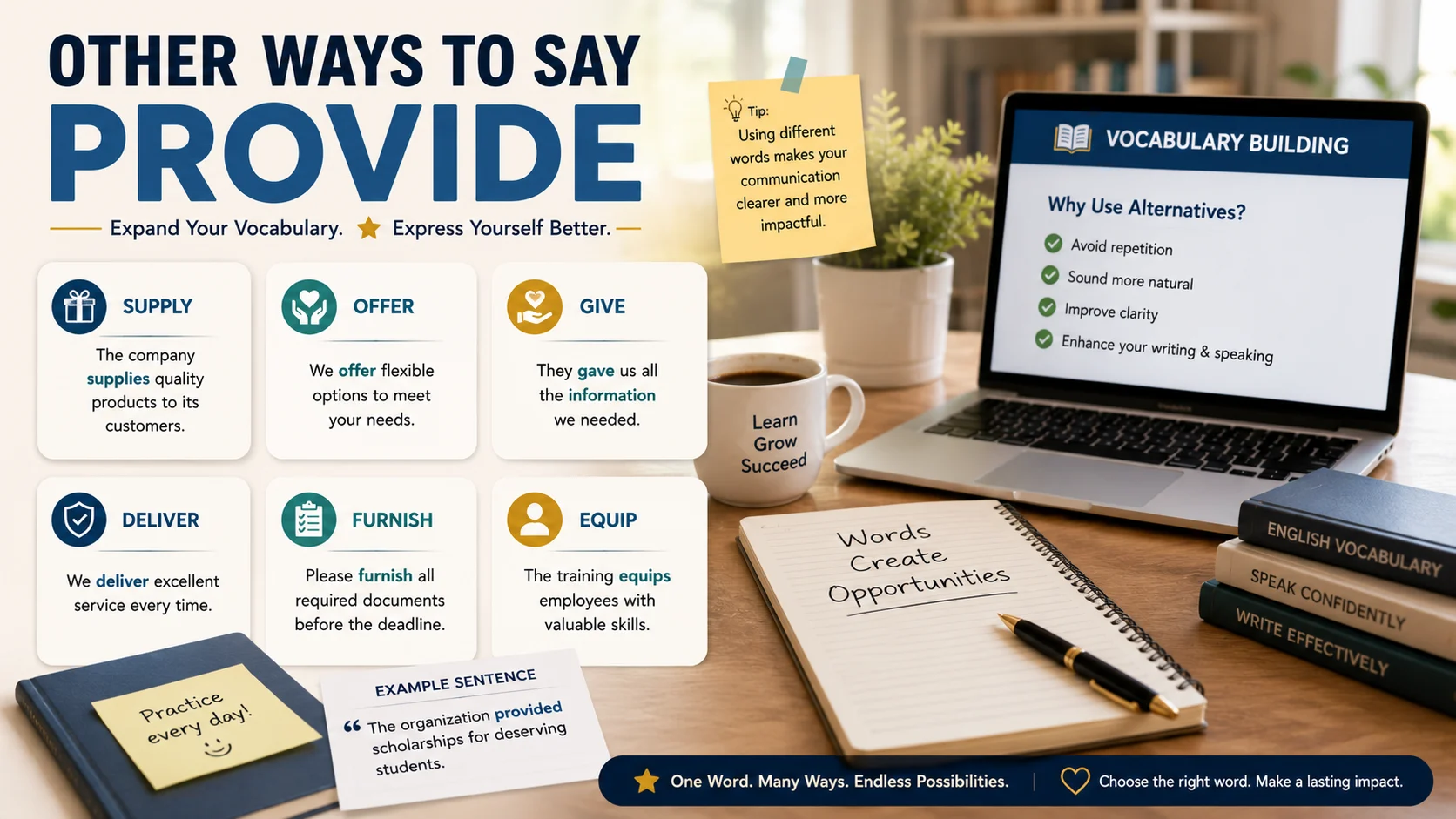
The word “provide” means to give, supply, or make something available to someone. Some of the best alternatives to “provide” include supply, deliver, furnish, offer and grant. Learning these other ways to say provide can improve your professional communication, writing variety and English fluency.
The word “provide” is one of the most commonly used verbs in English. People use it in business emails, academic writing, workplace communication, customer service, and everyday conversations.
However, repeating the same word too often can make your English sound basic or repetitive. Learning alternatives to provide helps you sound more natural, professional, and fluent in different situations.
Understanding tone also matters. Some synonyms work better in formal writing, while others are ideal for casual speech or professional reaction phrases. Choosing the right expression can help you express excitement in English, communicate clearly, and sound more confident.
“Strong vocabulary makes your English sound polished and professional.”
Formal Alternatives to “Provide”
- Furnish
- Grant
- Allocate
- Supply
Pro Tip
Use formal alternatives in reports, proposals, contracts, and academic writing to sound more professional and precise.
Casual Alternatives
- Give
- Hand over
- Pass along
- Hook up
Pro Tip
Casual phrases are better for conversations with friends or relaxed workplace communication.
Professional Alternatives
- Deliver
- Offer
- Support
- Equip
Pro Tip
Professional alternatives improve clarity and credibility in emails, presentations, and meetings.
Informal Expressions
- Set up
- Sort out
- Fix up
- Share
Pro Tip
Informal expressions in English work best in spoken communication and relaxed social settings.
“The right tone makes your English sound confident and natural.”
Common Mistakes When Using “Provide”
- Using “provide” with the wrong preposition
Example: ❌ “Provide me to information.”
Correct: ✔️ “Provide me with information.” - Overusing the word in business writing
Example: “We provide support and provide updates daily.” - Using formal synonyms in casual speech
Example: “I shall furnish you with coffee.” - Choosing vague alternatives
Example: “We did something for the client.” - Using “provide” without a clear object
Example: ❌ “The company provides.”
Correct: ✔️ “The company provides training.”
What Does “Provide” Mean?
The verb “provide” means to give, supply, or make something available for someone’s use or benefit.
It is usually followed by an object or the structure provide someone with something.
Example sentence:
The company provides free training for new employees.
When to Use “Provide”
You can use “provide” in many contexts, including:
- Business communication
- Customer service
- Academic writing
- Workplace instructions
- Everyday conversations
Spoken vs Written
- Spoken English: “give,” “help,” or “share” are often more natural
- Written English: “provide,” “furnish,” and “deliver” sound more professional
Formal vs Informal
- Formal: provide, furnish, allocate
- Informal: give, hook up, sort out
“Vocabulary flexibility helps you adapt to every situation.”
Is It Professional or Polite to Say “Provide”?
The word “provide” is polite and professional in most situations. It sounds respectful, clear, and business appropriate.
Business-style example:
Our team will provide technical support throughout the project.
Polite? ✔️ Yes
Professional? ✔️ Yes
Pros and Cons of Using “Provide”
Pros
- Simple and natural
- Friendly tone
- Common usage
- Easy to understand
Cons
- Can sound repetitive
- Sometimes too generic
- Limited emotional impact
- Less engaging in creative writing
Other Ways to Say “Provide” With Examples
These alternatives will help you sound more fluent, confident, and natural in different situations.
Use them according to tone, context, and audience to improve professional communication and informal expressions in English.
1. Phrase | Supply
- Meaning: To give needed items or resources.
- Explanation: Common in business and logistics.
- Example Sentence: The company supplies office equipment to employees.
- Best Use: Business writing
- Worst Use: Emotional speech
- Tone: Professional, neutral
- Context Variability: Casual, professional, spoken
2. Phrase | Deliver
- Meaning: To bring or give something officially.
- Explanation: Often used in services and projects.
- Example Sentence: We will deliver the report tomorrow.
- Best Use: Workplace updates
- Worst Use: Casual chatting
- Tone: Professional, direct
- Context Variability: Professional, spoken
3. Phrase | Furnish
- Meaning: To supply officially or formally.
- Explanation: Common in legal or formal English.
- Example Sentence: Please furnish the requested documents.
- Best Use: Formal documents
- Worst Use: Friendly chats
- Tone: Formal, polished
- Context Variability: Professional, written
4. Phrase | Offer
- Meaning: To present something willingly.
- Explanation: Sounds polite and flexible.
- Example Sentence: The hotel offers free breakfast.
- Best Use: Customer service
- Worst Use: Legal contracts
- Tone: Friendly, professional
- Context Variability: Casual, professional
5. Phrase | Give
- Meaning: To hand something to someone.
- Explanation: The simplest alternative.
- Example Sentence: Can you give me the notes?
- Best Use: Everyday speech
- Worst Use: Formal reports
- Tone: Casual, natural
- Context Variability: Spoken, casual
“Professional English depends on choosing the right word for the right audience.”
6. Phrase | Grant
- Meaning: To officially allow or provide something.
- Explanation: Often used with permission or requests.
- Example Sentence: The manager granted extra leave days.
- Best Use: Official approval
- Worst Use: Informal texting
- Tone: Formal, authoritative
- Context Variability: Professional, written
7. Phrase | Allocate
- Meaning: To distribute resources or time.
- Explanation: Common in management and finance.
- Example Sentence: The company allocated more funds to marketing.
- Best Use: Corporate planning
- Worst Use: Casual talk
- Tone: Formal, strategic
- Context Variability: Professional
8. Phrase | Equip
- Meaning: To provide tools or skills.
- Explanation: Often related to preparation.
- Example Sentence: The course equips students with practical skills.
- Best Use: Training contexts
- Worst Use: Informal slang
- Tone: Professional, educational
- Context Variability: Academic, professional
9. Phrase | Support
- Meaning: To assist or help.
- Explanation: Common in customer service.
- Example Sentence: Our team supports clients 24/7.
- Best Use: Customer relations
- Worst Use: Legal writing
- Tone: Helpful, professional
- Context Variability: Spoken, workplace
10. Phrase | Contribute
- Meaning: To give something as part of a group effort.
- Explanation: Often used in teamwork.
- Example Sentence: Everyone contributed ideas during the meeting.
- Best Use: Collaboration
- Worst Use: Formal supply chains
- Tone: Cooperative, positive
- Context Variability: Professional, spoken
11. Phrase | Hand Over
- Meaning: To transfer something directly.
- Explanation: Common in spoken English.
- Example Sentence: Please hand over the keys.
- Best Use: Everyday tasks
- Worst Use: Academic papers
- Tone: Casual, direct
- Context Variability: Spoken, informal
12. Phrase | Share
- Meaning: To let others use or know something.
- Explanation: Common in digital communication.
- Example Sentence: She shared the presentation link.
- Best Use: Team communication
- Worst Use: Legal contracts
- Tone: Friendly, collaborative
- Context Variability: Casual, workplace
13. Phrase | Present
- Meaning: To formally show or provide something.
- Explanation: Often used in meetings.
- Example Sentence: The team presented new solutions.
- Best Use: Presentations
- Worst Use: Informal chats
- Tone: Formal, professional
- Context Variability: Business, academic
14. Phrase | Make Available
- Meaning: To allow access to something.
- Explanation: Common in official communication.
- Example Sentence: The files are now available online.
- Best Use: Announcements
- Worst Use: Casual texting
- Tone: Neutral, professional
- Context Variability: Written, workplace
15. Phrase | Distribute
- Meaning: To give out to many people.
- Explanation: Often used for materials or products.
- Example Sentence: Teachers distributed worksheets to students.
- Best Use: Group settings
- Worst Use: Emotional contexts
- Tone: Neutral, organizational
- Context Variability: Academic, business
16. Phrase | Extend
- Meaning: To offer or provide politely.
- Explanation: Often used with invitations or support.
- Example Sentence: We extend our gratitude to all volunteers.
- Best Use: Formal writing
- Worst Use: Casual slang
- Tone: Respectful, formal
- Context Variability: Professional
17. Phrase | Issue
- Meaning: To officially provide documents or items.
- Explanation: Common in administration.
- Example Sentence: The office issued new ID cards.
- Best Use: Official processes
- Worst Use: Friendly chats
- Tone: Formal, official
- Context Variability: Workplace
18. Phrase | Arrange
- Meaning: To organize or provide something indirectly.
- Explanation: Useful for planning contexts.
- Example Sentence: We arranged transportation for guests.
- Best Use: Event planning
- Worst Use: Legal writing
- Tone: Helpful, practical
- Context Variability: Casual, professional
19. Phrase | Facilitate
- Meaning: To make something easier or possible.
- Explanation: Common in business English.
- Example Sentence: Technology facilitates remote learning.
- Best Use: Corporate communication
- Worst Use: Informal speech
- Tone: Professional, formal
- Context Variability: Academic, business
20. Phrase | Serve
- Meaning: To provide assistance or products.
- Explanation: Often used in customer service.
- Example Sentence: The restaurant serves Italian food.
- Best Use: Hospitality
- Worst Use: Technical reports
- Tone: Friendly, service-oriented
- Context Variability: Spoken, professional
“Learning alternatives to provide helps your writing sound less repetitive.”
21. Phrase | Sponsor
- Meaning: To financially support something.
- Explanation: Common in events and promotions.
- Example Sentence: The company sponsored the conference.
- Best Use: Events
- Worst Use: Casual requests
- Tone: Professional, supportive
- Context Variability: Business
22. Phrase | Donate
- Meaning: To give voluntarily.
- Explanation: Often related to charity.
- Example Sentence: They donated books to schools.
- Best Use: Charity work
- Worst Use: Business contracts
- Tone: Generous, positive
- Context Variability: Spoken, written
23. Phrase | Pass Along
- Meaning: To give information or items to another person.
- Explanation: Informal but common.
- Example Sentence: Please pass along the message.
- Best Use: Team chats
- Worst Use: Legal documents
- Tone: Casual, friendly
- Context Variability: Informal, spoken
24. Phrase | Set Up
- Meaning: To arrange or prepare something.
- Explanation: Common in technology and events.
- Example Sentence: I set up the meeting room earlier.
- Best Use: Workplace tasks
- Worst Use: Academic essays
- Tone: Practical, casual
- Context Variability: Spoken, professional
25. Phrase | Hook Up
- Meaning: To provide casually or helpfully.
- Explanation: Very informal expression.
- Example Sentence: He hooked me up with concert tickets.
- Best Use: Friendly conversation
- Worst Use: Professional emails
- Tone: Informal, relaxed
- Context Variability: Casual speech
26. Phrase | Supply With
- Meaning: To provide someone with something specific.
- Explanation: A slightly more formal structure.
- Example Sentence: They supplied workers with safety gear.
- Best Use: Workplace safety
- Worst Use: Casual texting
- Tone: Professional, clear
- Context Variability: Business
27. Phrase | Cater To
- Meaning: To provide according to needs.
- Explanation: Common in customer-focused industries.
- Example Sentence: The program caters to beginners.
- Best Use: Service industries
- Worst Use: Legal contexts
- Tone: Friendly, customer-focused
- Context Variability: Professional, spoken
28. Phrase | Assist With
- Meaning: To help provide support.
- Explanation: Polite and professional.
- Example Sentence: We can assist with installation.
- Best Use: Customer support
- Worst Use: Casual slang
- Tone: Helpful, professional
- Context Variability: Workplace
29. Phrase | Fit Out
- Meaning: To provide equipment or furniture.
- Explanation: Common in British English.
- Example Sentence: The office was fitted out with new computers.
- Best Use: Office setup
- Worst Use: Everyday casual speech
- Tone: Practical, neutral
- Context Variability: Professional
30. Phrase | Sort Out
- Meaning: To arrange or provide a solution.
- Explanation: Common informal British phrase.
- Example Sentence: Don’t worry, I’ll sort out the tickets.
- Best Use: Friendly conversation
- Worst Use: Formal writing
- Tone: Casual, reassuring
- Context Variability: Informal, spoken
Mini Quiz / Self Check
1. Which alternative sounds most professional in a legal document?
A) Hook up
B) Furnish
C) Sort out
Correct Answer: B) Furnish
2. Which phrase is best for casual spoken English?
A) Allocate
B) Grant
C) Hand over
Correct Answer: C) Hand over
3. Which alternative is best for customer service?
A) Assist with
B) Hook up
C) Donate
Correct Answer: A) Assist with
4. Which phrase is too informal for business emails?
A) Deliver
B) Supply
C) Hook up
Correct Answer: C) Hook up
Comparison Table | Top Alternatives
| Phrase | Tone | Best Use |
|---|---|---|
| Supply | Professional | Business |
| Deliver | Direct | Projects |
| Furnish | Formal | Legal writing |
| Offer | Friendly | Customer service |
| Give | Casual | Everyday speech |
| Grant | Official | Permissions |
| Allocate | Strategic | Management |
| Equip | Educational | Training |
| Support | Helpful | Customer care |
| Share | Collaborative | Teamwork |
FAQs
What are the best alternatives to provide in professional writing?
The best professional alternatives to provide include “supply,” “deliver,” “furnish,” “allocate,” and “facilitate.” These words sound more precise and polished in business communication.
Can I use “give” instead of “provide”?
Yes, but “give” is more casual. “Provide” sounds more professional and is better for formal or workplace writing.
What is the most formal synonym for provide?
“Furnish” and “grant” are among the most formal alternatives to provide, especially in legal or official contexts.
Which alternatives to provide are best for emails?
For professional emails, use “offer,” “deliver,” “assist with,” or “support.” These phrases sound clear and courteous.
Why should I learn other ways to say provide?
Learning other ways to say provide improves vocabulary variety, professional communication, and fluency in both spoken and written English.
Conclusion
Learning other ways to say provide can make your English sound more natural, fluent, and professional. Different alternatives work better in different situations, so understanding tone and context is essential.
Practice using these phrases in emails, conversations, presentations, and writing exercises every day. The more vocabulary flexibility you develop, the more confident and effective your communication will become.