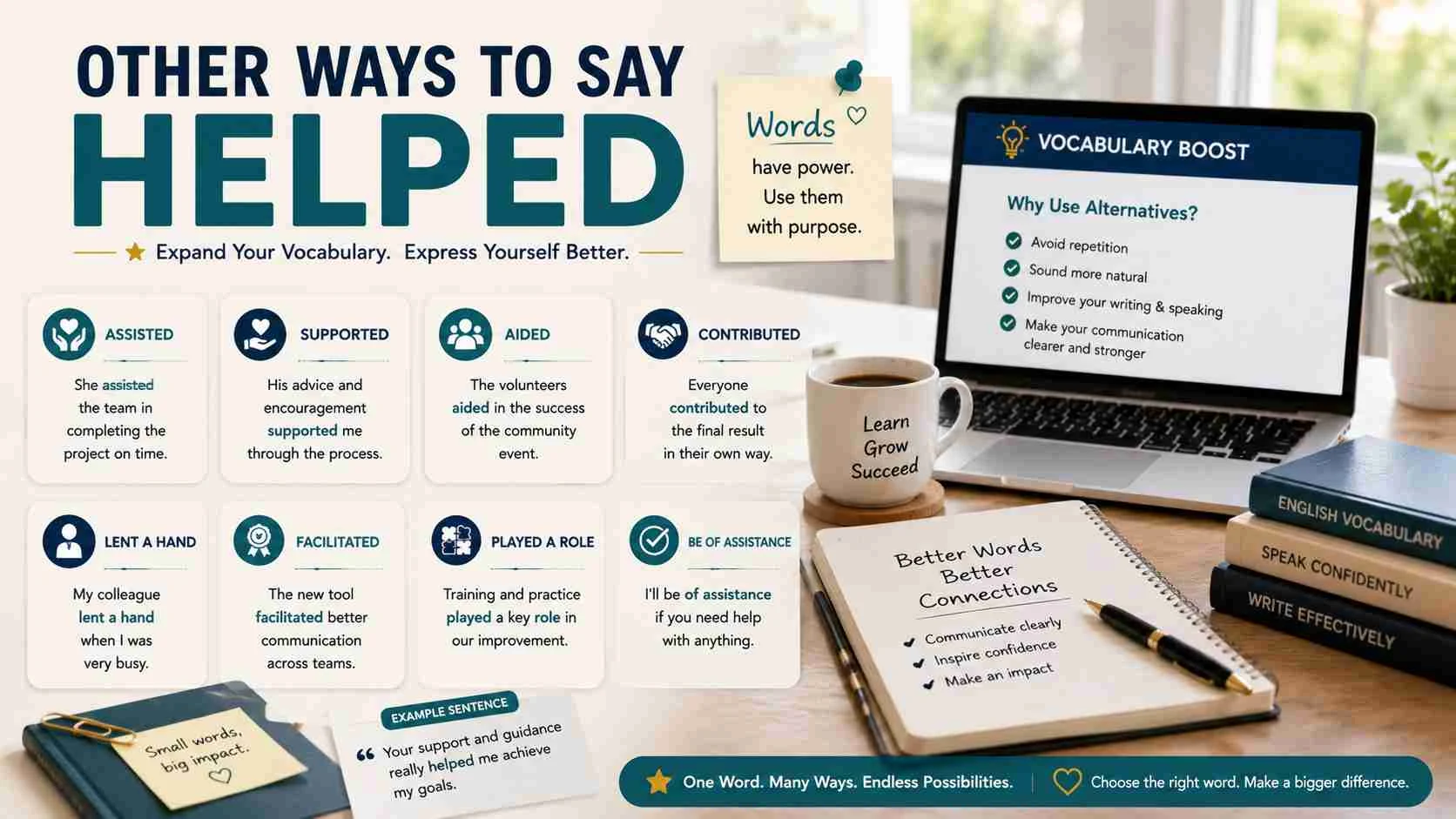
Some of the best other ways to say helped include assisted, supported, guided, contributed and aided. These alternatives sound more natural in professional, academic and casual conversations while helping you express yourself more clearly and confidently.
The word “helped” is one of the most commonly used verbs in English. People use it in conversations, emails, presentations, and everyday writing to describe giving support, assistance, or guidance.
However, repeating the same word too often can make your English sound basic or repetitive. Learning alternatives to helped improves fluency and makes your communication more professional and engaging.
Using different expressions also allows you to express excitement in English more naturally while adapting your tone for formal, casual, or workplace situations.
“Strong vocabulary makes your English sound confident, polished and professional.”
Formal Alternatives to “Helped”
Common Formal Choices
- Assisted
- Supported
- Facilitated
- Contributed
- Enabled
Academic and Business Options
- Collaborated with
- Guided
- Advised
- Backed
- Strengthened
Pro Tip
Choose formal alternatives when writing emails, reports, resumes, or academic assignments to sound more polished and credible.
Casual Alternatives
Friendly Everyday Expressions
- Pitched in
- Lent a hand
- Came through
- Had my back
- Stepped in
Relaxed Spoken English
- Sorted out
- Took care of
- Showed me how
- Got me through
Pro Tip
Casual phrases work best in conversations with friends, family, or teammates. Avoid using them in official documents.
“The right phrase can completely change how professional your English sounds.”
Professional Alternatives
Workplace-Friendly Phrases
- Assisted with
- Provided support
- Contributed to
- Coordinated
- Guided the team
Leadership and Management Language
- Mentored
- Facilitated progress
- Enabled success
- Streamlined
Pro Tip
Professional reaction phrases are especially useful in resumes, LinkedIn profiles, and workplace communication.
Informal Expressions
Conversational Phrases
- Had my back
- Pulled me through
- Saved the day
- Gave me a boost
Everyday Informal Expressions in English
- Came in clutch
- Took over
- Fixed things up
Pro Tip
Informal expressions in English make conversations sound natural, but they may feel too casual in formal settings.
Common Mistakes When Using “Helped”
Using “Helped” Too Frequently
Example:
- Incorrect: “She helped me, helped my team, and helped the company.”
- Better: “She supported my team and contributed to the company.”
Using Informal Alternatives in Formal Emails
Example:
- Incorrect: “Thanks for having my back during the meeting.”
- Better: “Thank you for your support during the meeting.”
Confusing Tone
Example:
- Incorrect: “The manager pitched in with the annual report.”
- Better: “The manager assisted with the annual report.”
Using the Wrong Grammar Structure
Example:
- Incorrect: “She helped to improving the project.”
- Better: “She helped improve the project.”
Choosing Unnatural Synonyms
Example:
- Incorrect: “He rescued my presentation.”
- Better: “He supported my presentation.”
“Fluent English is not about difficult words. It’s about choosing the right words.”
What Does “Helped” Mean?
The word “helped” means giving support, assistance, or aid to someone or something.
Grammatically, it is the past tense of the verb help.
Example sentence:
- “My colleague helped me finish the report on time.”
When to Use “Helped”
Common Contexts
- Workplace conversations
- School assignments
- Customer support
- Team projects
- Everyday discussions
Spoken vs Written
- Spoken English: Common and natural
- Written English: Acceptable but sometimes repetitive
Formal vs Informal
- Formal: Better replaced with professional alternatives
- Informal: Perfectly acceptable
Is It Professional or Polite to Say “Helped”?
The word “helped” is polite and easy to understand. However, it may sound too simple in highly professional situations.
Business-style example:
- “Her guidance assisted the team in completing the project successfully.”
Polite? ✔️ Yes
Professional? ❌ No (in most cases)
Pros and Cons of Using “Helped”
Pros
- Simple and natural
- Friendly tone
- Common usage
- Easy to understand
Cons
- Too informal for work
- Overused
- Limited emotional range
- Not suitable for formal writing
“Professional English often depends on variety, tone and context.”
Other Ways to Say “Helped” With Examples
These alternatives will help you sound more fluent, confident, and natural in different situations.
Use them according to tone, context, and audience to express excitement, admiration, or approval.
1. Phrase | Assisted
- Meaning: Provided support or aid.
- Explanation: Common in professional and academic English.
- Example Sentence:
- “She assisted the manager during the presentation.”
- Best Use:
- Business emails
- Worst Use:
- Casual jokes
- Tone:
- Professional, formal
- Context Variability:
- Professional, written, spoken
2. Phrase | Supported
- Meaning: Gave encouragement or assistance.
- Explanation: Useful in both emotional and professional contexts.
- Example Sentence:
- “My friends supported me during the interview process.”
- Best Use:
- Emotional support
- Worst Use:
- Legal writing
- Tone:
- Warm, professional
- Context Variability:
- Casual, professional, spoken
3. Phrase | Guided
- Meaning: Showed someone the right direction.
- Explanation: Often used for mentoring or teaching.
- Example Sentence:
- “The senior employee guided the new intern.”
- Best Use:
- Mentorship
- Worst Use:
- Emergencies
- Tone:
- Helpful, respectful
- Context Variability:
- Professional, spoken
4. Phrase | Aided
- Meaning: Gave practical assistance.
- Explanation: Slightly formal and concise.
- Example Sentence:
- “Technology aided communication during the event.”
- Best Use:
- Formal writing
- Worst Use:
- Friendly chats
- Tone:
- Formal, direct
- Context Variability:
- Academic, professional
5. Phrase | Contributed
- Meaning: Added value or effort.
- Explanation: Common in teamwork discussions.
- Example Sentence:
- “Everyone contributed to the final project.”
- Best Use:
- Teamwork
- Worst Use:
- Personal favors
- Tone:
- Collaborative, professional
- Context Variability:
- Professional, spoken
6. Phrase | Facilitated
- Meaning: Made something easier.
- Explanation: Popular in business communication.
- Example Sentence:
- “The software facilitated remote collaboration.”
- Best Use:
- Corporate settings
- Worst Use:
- Casual texting
- Tone:
- Formal, polished
- Context Variability:
- Professional, written
7. Phrase | Encouraged
- Meaning: Motivated someone positively.
- Explanation: Focuses on emotional support.
- Example Sentence:
- “Her teacher encouraged her to apply.”
- Best Use:
- Motivation
- Worst Use:
- Technical writing
- Tone:
- Positive, caring
- Context Variability:
- Casual, spoken
8. Phrase | Backed
- Meaning: Supported someone publicly or privately.
- Explanation: Strong and confident expression.
- Example Sentence:
- “The company backed the new proposal.”
- Best Use:
- Leadership contexts
- Worst Use:
- Academic essays
- Tone:
- Strong, supportive
- Context Variability:
- Professional, spoken
9. Phrase | Mentored
- Meaning: Guided someone with experience.
- Explanation: Used for coaching and career growth.
- Example Sentence:
- “She mentored junior employees.”
- Best Use:
- Career development
- Worst Use:
- Emergency situations
- Tone:
- Professional, supportive
- Context Variability:
- Professional, educational
10. Phrase | Advised
- Meaning: Offered recommendations or guidance.
- Explanation: Common in professional communication.
- Example Sentence:
- “The consultant advised the team carefully.”
- Best Use:
- Expert opinions
- Worst Use:
- Friendly favors
- Tone:
- Formal, knowledgeable
- Context Variability:
- Professional, academic
“Learning alternatives to helped improves both vocabulary and confidence.”
11. Phrase | Cooperated
- Meaning: Worked together successfully.
- Explanation: Focuses on teamwork.
- Example Sentence:
- “The departments cooperated efficiently.”
- Best Use:
- Team projects
- Worst Use:
- Personal support
- Tone:
- Professional, neutral
- Context Variability:
- Workplace, spoken
12. Phrase | Collaborated
- Meaning: Worked jointly with others.
- Explanation: Very common in business and creative work.
- Example Sentence:
- “The designers collaborated on the campaign.”
- Best Use:
- Creative teams
- Worst Use:
- Emotional situations
- Tone:
- Modern, professional
- Context Variability:
- Professional, spoken
13. Phrase | Enabled
- Meaning: Made something possible.
- Explanation: Strong professional alternative.
- Example Sentence:
- “New tools enabled faster communication.”
- Best Use:
- Corporate writing
- Worst Use:
- Casual chats
- Tone:
- Formal, strategic
- Context Variability:
- Professional, written
14. Phrase | Strengthened
- Meaning: Made something stronger.
- Explanation: Often used in relationships or business.
- Example Sentence:
- “The training strengthened team performance.”
- Best Use:
- Development contexts
- Worst Use:
- Informal texting
- Tone:
- Positive, professional
- Context Variability:
- Professional, academic
15. Phrase | Boosted
- Meaning: Increased confidence or performance.
- Explanation: Dynamic and energetic phrase.
- Example Sentence:
- “The workshop boosted employee morale.”
- Best Use:
- Motivation
- Worst Use:
- Legal documents
- Tone:
- Positive, energetic
- Context Variability:
- Casual, professional
16. Phrase | Pitched In
- Meaning: Joined to help.
- Explanation: Friendly conversational phrase.
- Example Sentence:
- “Everyone pitched in during the event.”
- Best Use:
- Casual teamwork
- Worst Use:
- Formal reports
- Tone:
- Casual, friendly
- Context Variability:
- Informal, spoken
17. Phrase | Lent a Hand
- Meaning: Offered assistance.
- Explanation: Warm and natural expression.
- Example Sentence:
- “My neighbor lent a hand yesterday.”
- Best Use:
- Friendly support
- Worst Use:
- Business presentations
- Tone:
- Friendly, informal
- Context Variability:
- Casual, spoken
18. Phrase | Stepped In
- Meaning: Took action to assist.
- Explanation: Common during urgent situations.
- Example Sentence:
- “Her manager stepped in immediately.”
- Best Use:
- Emergencies
- Worst Use:
- Academic writing
- Tone:
- Helpful, active
- Context Variability:
- Casual, workplace
19. Phrase | Came Through
- Meaning: Delivered support successfully.
- Explanation: Popular in conversational English.
- Example Sentence:
- “My friend really came through for me.”
- Best Use:
- Personal support
- Worst Use:
- Corporate reports
- Tone:
- Warm, conversational
- Context Variability:
- Informal, spoken
20. Phrase | Had My Back
- Meaning: Protected or supported someone.
- Explanation: Informal but expressive phrase.
- Example Sentence:
- “She had my back during the meeting.”
- Best Use:
- Friendship
- Worst Use:
- Formal communication
- Tone:
- Informal, supportive
- Context Variability:
- Spoken, casual
21. Phrase | Rescued
- Meaning: Saved from difficulty.
- Explanation: Dramatic but useful informally.
- Example Sentence:
- “He rescued the presentation at the last minute.”
- Best Use:
- Storytelling
- Worst Use:
- Formal reports
- Tone:
- Dramatic, informal
- Context Variability:
- Casual, spoken
22. Phrase | Guided Me Through
- Meaning: Helped step by step.
- Explanation: Emphasizes detailed support.
- Example Sentence:
- “The instructor guided me through the process.”
- Best Use:
- Training
- Worst Use:
- Quick chats
- Tone:
- Supportive, clear
- Context Variability:
- Educational, professional
23. Phrase | Provided Support
- Meaning: Offered assistance or resources.
- Explanation: Professional workplace phrase.
- Example Sentence:
- “HR provided support during onboarding.”
- Best Use:
- Workplace communication
- Worst Use:
- Friendly texting
- Tone:
- Formal, professional
- Context Variability:
- Professional, written
24. Phrase | Coordinated
- Meaning: Organized assistance effectively.
- Explanation: Common in project management.
- Example Sentence:
- “She coordinated the team successfully.”
- Best Use:
- Management
- Worst Use:
- Personal favors
- Tone:
- Organized, professional
- Context Variability:
- Workplace, formal
25. Phrase | Streamlined
- Meaning: Made a process easier.
- Explanation: Modern business vocabulary.
- Example Sentence:
- “Automation streamlined customer support.”
- Best Use:
- Corporate reports
- Worst Use:
- Casual conversation
- Tone:
- Efficient, formal
- Context Variability:
- Professional, written
26. Phrase | Motivated
- Meaning: Inspired action or confidence.
- Explanation: Focuses on emotional encouragement.
- Example Sentence:
- “Her speech motivated the students.”
- Best Use:
- Inspiration
- Worst Use:
- Technical contexts
- Tone:
- Positive, energetic
- Context Variability:
- Casual, educational
27. Phrase | Empowered
- Meaning: Gave confidence or authority.
- Explanation: Strong professional expression.
- Example Sentence:
- “The training empowered employees.”
- Best Use:
- Leadership
- Worst Use:
- Casual jokes
- Tone:
- Inspiring, professional
- Context Variability:
- Professional, motivational
28. Phrase | Served
- Meaning: Assisted or benefited someone.
- Explanation: Slightly formal and service-oriented.
- Example Sentence:
- “The program served local communities.”
- Best Use:
- Community work
- Worst Use:
- Friendly chats
- Tone:
- Formal, respectful
- Context Variability:
- Professional, academic
29. Phrase | Took Care Of
- Meaning: Managed or handled assistance.
- Explanation: Common casual phrase.
- Example Sentence:
- “She took care of everything.”
- Best Use:
- Everyday speech
- Worst Use:
- Formal presentations
- Tone:
- Relaxed, conversational
- Context Variability:
- Casual, spoken
30. Phrase | Pulled Me Through
- Meaning: Helped during a difficult situation.
- Explanation: Emotional and expressive phrase.
- Example Sentence:
- “My family pulled me through tough times.”
- Best Use:
- Emotional support
- Worst Use:
- Corporate writing
- Tone:
- Emotional, supportive
- Context Variability:
- Casual, spoken
“Vocabulary variety helps you express emotions, professionalism, and confidence more naturally.”
Mini Quiz / Self Check
1. Which phrase sounds most professional in a business email?
A. Had my back
B. Assisted
C. Came through
Answer:
- B. Assisted
2. Which expression is best for casual spoken English?
A. Facilitated
B. Enabled
C. Lent a hand
Answer:
- C. Lent a hand
3. Which phrase works best for mentorship?
A. Mentored
B. Rescued
C. Took care of
Answer:
- A. Mentored
4. Which option is too informal for a formal report?
A. Supported
B. Streamlined
C. Pitched in
Answer:
- C. Pitched in
Comparison Table | Top Alternatives
| Phrase | Tone | Best Use |
|---|---|---|
| Assisted | Professional | Business writing |
| Supported | Warm | Teamwork |
| Guided | Helpful | Mentoring |
| Facilitated | Formal | Corporate communication |
| Contributed | Collaborative | Group projects |
| Mentored | Professional | Leadership |
| Enabled | Strategic | Reports |
| Boosted | Positive | Motivation |
| Lent a Hand | Friendly | Casual speech |
| Streamlined | Efficient | Workplace systems |
FAQs
What are the best professional alternatives to “helped”?
The best professional alternatives include assisted, facilitated, supported, enabled, and contributed. These phrases sound polished in workplace communication.
Can I use “helped” in formal writing?
Yes, but it may sound too basic or repetitive. Formal alternatives to helped often sound more professional and precise.
What is a casual alternative to “helped”?
Casual alternatives include pitched in, lent a hand, came through, and had my back.
Why should I learn other ways to say helped?
Learning other ways to say helped improves vocabulary, fluency, and tone awareness in spoken and written English.
Which alternative works best on a resume?
Words like assisted, coordinated, facilitated, and contributed are excellent choices for resumes and LinkedIn profiles.
Conclusion
Learning other ways to say helped can instantly improve your English vocabulary and communication skills. You are speaking casually, writing professionally, or trying to express excitement in English, choosing the right phrase makes your message clearer and more effective.
Practice these alternatives daily and pay attention to tone, audience, and context. Over time, your English will sound more natural, polished, and confident.
Discover More Related Articles:
- Other Ways to Say Happy Birthday to Someone | Heartfelt Lines That Stand Out In 2026
- Other Ways to Say Wishing You a Speedy Recovery | Better Ways to Show You Care In 2026
- Other Ways to Say De Nada in Spanish | Polite Replies Locals Use In 2026